
Best Iron Filter for Well Water Systems in 2025
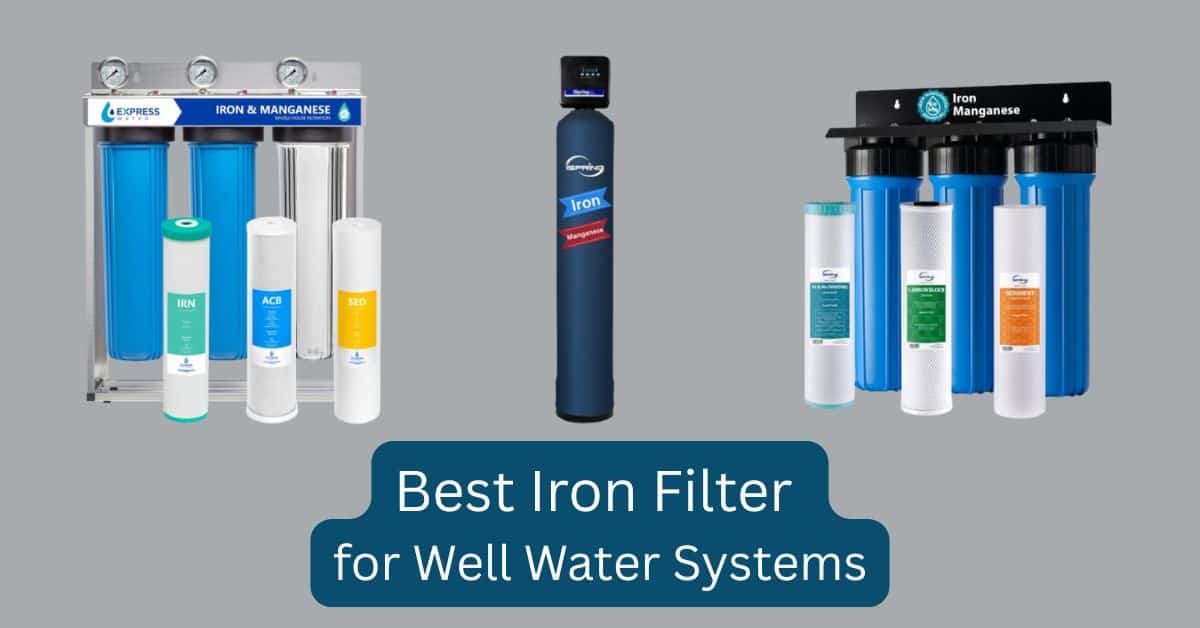
Find the best iron filter for well water in 2025. Compare top-rated systems to eliminate iron, rust, and metallic taste for cleaner water.

Affiliate disclosure: Some links on this page are affiliate links. If you click an affiliate link and make a purchase, I may earn a small commission at no extra cost to you. I only recommend products I believe are useful to readers.
Rust-coloured stains, a metallic taste, and reddish particles can all point to iron in well water, but they do not call for the same filter. The treatment has to match whether the iron is still dissolved or has already oxidized into visible sediment.
Iron filters work by oxidizing dissolved iron and then filtering out the particles. Some filters use air injection, while others use chemical oxidation or catalytic media.
The right type depends on your water’s iron levels, pH, and whether you have other contaminants like sulfur or manganese. The most important factors to consider are your water’s iron concentration, flow rate needs, and maintenance requirements.
You’ll also want to think about whether you need a system that handles other contaminants beyond iron. I compared manufacturer specifications, iron-reduction claims, filter media, maintenance requirements, and published product information to identify strong options for different well water conditions.
Best Iron Filters for Well Water
The picks below are organized using published specifications, stated performance claims, maintenance demands, and fit for different household use cases. I focused on systems marketed for iron reduction, service interval, and installation fit.
DuraWater Fleck 5600 SXT Iron Filter

Best for most well water situations.
Key specs: Fleck 5600 SXT air-injection valve; 1.5 cu ft Centaur catalytic carbon media in a 10” × 54” tank; 1” bypass (DuraWater listing on Amazon)
Pros
- Eliminates iron stains and discoloration from fixtures completely
- Air injection system works automatically without constant maintenance
- Handles multiple contaminants including sulfur smell and manganese
Cons
- Installation can be challenging for beginners despite detailed instructions
- Takes up significant space at 4 feet tall
- May need setting adjustments if used with septic systems
iSpring WGB32BM Iron Filter

Best for most well water situations.
Key specs: 100,000-gallon capacity; peak flow 15 GPM; working pressure 25-80 psi; 1” NPT ports; 3-stage design with 5-micron sediment; 1-year limited warranty (iSpring WGB32BM listing on Amazon)
Pros
- Handles up to 3.0 ppm iron and 1.0 ppm manganese without needing constant media replacement
- Simple installation process with clear instructions and helpful video guides
- Maintains strong water pressure at 15 GPM while filtering your entire home
Cons
- Takes up significant space with its 28-inch height in your utility area
- Filter cartridges need replacement after treating 100,000 gallons of water
- Won’t remove dissolved solids if your well water has high mineral content
Waterdrop Whole House Iron Filter

Best for well water owners dealing with iron problems who want a reliable system that removes most iron.
Key specs: 2-stage, 5-micron; 50,000-gallon capacity (up to 6 months); 1” inlet/outlet (Waterdrop WHF21-FG listing on Amazon); flow up to 15 GPM; reduces iron; manufacturer states up to 98.9% manganese and 95.6% chlorine reduction; 1-year warranty (Waterdrop – WHF21-FG Whole House Water Filter)
Pros
- Manufacturer states up to 98.9% manganese and 95.6% chlorine reduction
- Six-month filter life reduces replacement costs compared to monthly changes
- Simple installation process that most homeowners can handle themselves
Cons
- Some units develop leaks at connection points that require extra sealing
- Temperature limits restrict use in very cold environments below 40°F
- Heavy 10-pound weight makes filter changes more difficult for some users
DuraWater Air Injection Iron Eater Filter

Best for homeowners dealing with moderate to high iron levels in their well water.
Key specs: air-injection carbon filter; 10” × 54” tank with 1.0 cu ft iron-blend media; Fleck 5600 SXT digital valve; listing states it removes iron up to 12 ppm, sulfur up to 10 ppm, manganese up to 2 ppm (DuraWater listing on Amazon)
Pros
- Handles high iron levels up to 12 ppm effectively without chemical additives
- Digital controls make monitoring and adjustments straightforward
- Installation process is manageable for people with basic plumbing experience
Cons
- Takes up considerable space due to its 54-inch height requirement
- Initial setup requires some technical knowledge to get optimal performance
- System needs regular maintenance to keep air injection working properly
PUREPLUS Iron Manganese Filter

Best for well water owners who need basic iron removal at a budget-friendly price point.
Key specs: 1-stage whole-house system; 10” × 4.5” universal housing with iron-reducing cartridge; 1” NPT port; food-grade polypropylene housing (PUREPLUS listing on Amazon)
Pros
- Works well for removing sediment and iron particles from well water
- Strong housing construction that handles water pressure effectively
- Accepts standard 10-inch filters for easy replacement options
Cons
- Installation can be tricky with potential leaking issues around seals
- Heavy unit requires solid wall mounting that may need reinforcement
- Some units arrive with defective filters that don’t allow water flow
Express Water Iron & Manganese Filter

Best for homes dealing with moderate iron and manganese levels in well water.
Key specs: 3-stage; rated for 100,000 gallons; flow up to 17 GPM (0.25 gal/s at 45-80 psi); operating pressure 20-80 psi; stainless-steel frame; 23.5” × 8.5” × 29.25”; 57 lb (Express Water listing on Amazon)
Pros
- Designed to target iron-related staining on fixtures and in laundry loads
- Stainless-steel frame
- Pressure gauges make it simple to monitor when filters need changing
Cons
- Takes up considerable floor space at nearly 30 inches tall
- Filter replacements every 6-12 months add ongoing costs
- Installation requires some plumbing knowledge or professional help
Waterdrop Iron Filter

Best for basic iron removal.
Key specs: 5-micron iron-reducing cartridge (WF10F); 10” × 4.5” format; listing states up to 99.3% iron and 96.8% manganese reduction; 6-month design life (Waterdrop WF10F listing on Amazon)
Pros
- Removes most iron and manganese from well water without expensive equipment
- Works with many existing filter systems you might already have
- Costs much less than whole-house iron removal systems
Cons
- Filter life is often shorter than the claimed 6 months with heavy iron
- Some users see no change in water color or taste
- Needs a second filter downstream to catch loose particles
H&G Lifestyles Whole House Iron Filter

Best for homes that need one system to address iron, sulfur, and sediment concerns together.
Key specs: rated for 700,000 gallons; flow up to 7 GPM; operating pressure 20-100 psi; iron-removal resin media; 20.3 × 20.3 × 68.6 cm system (H&G Lifestyles listing on Amazon)
Pros
- Removes iron, manganese, and hydrogen sulfide while also softening water
- Installation was straightforward with included valves and fittings
- Handles decent flow rates without major pressure drops
Cons
- Only six customer reviews makes long-term reliability unclear
- Takes up significant space at 27 inches tall
- May need frequent regeneration in areas with very high iron content
AFWFilters Air Injection System

Best for homeowners dealing with moderate iron and sulfur issues who want a chemical-free solution for their whole house.
Key specs: air-injection iron/sulfur/manganese system (AIS10-25SXT); 10” × 10” × 62” system; max incoming TDS 1500 ppm; 120 °F max temperature; air-powered oxidizer (AFWFilters listing on Amazon)
Pros
- Works without chemicals by using natural oxidation to remove contaminants
- Handles multiple water problems including iron, sulfur, and manganese in one unit
- Requires minimal upkeep once installed and running properly
Cons
- Takes up significant space at 62 inches tall in your utility area
- Installation can be challenging for beginners without plumbing experience
- May struggle with very high iron levels above 15 ppm
PRO+AQUA Heavy Duty Whole House Filter

Best for larger households dealing with iron and other well water problems.
Key specs: backwashing whole-house filter (PRO-WELL-1E); max flow 10 GPM; 83 lb; 2-year standard warranty, extendable to 4 years with registration (PRO+AQUA – PRO-WELL-1E Whole House Well Water Filtration System)
Pros
- Handles high flow rates for families with multiple bathrooms
- Digital display makes programming and monitoring simple
- Built with durable commercial-grade parts in the USA
Cons
- Customer service can be difficult to reach when problems arise
- Some households still notice particles after installation
- Backwash function may malfunction and show error messages
iSpring WCFM400K Iron Filter

Best for homeowners who want air-injection iron removal without adding chemicals.
Key specs: 400,000-gallon capacity; air-injection with automatic regeneration; catalytic media; 1-year warranty; NSF/ANSI Standard 61-certified filter media; 14”L x 12”W x 54”H tank weighing 115 lb (iSpring WCFM400K listing on Amazon) (iSpring – WCFM400K product page)
Pros
- Air injection system works without adding any chemicals to your water
- Digital control valve handles backwashing automatically once you set it up
- Strong flow rate keeps water pressure good throughout the house
Cons
- Takes up significant floor space
- Does not remove hydrogen sulfide smells from well water
- Installation requires electrical connection and drain line setup
H&G Lifestyles Hose Iron Filter

Best for light-duty hose applications where basic sediment and iron reduction is more important than whole-house treatment.
Key specs: hose-end filter for filling pools and hot tubs; rated up to 10,000 gallons; fits standard 3/4” garden-hose thread; reduces iron, manganese, lead, cadmium, mercury; the listing states a 13.2 oz item weight (H&G Lifestyles listing on Amazon)
Pros
- Simple installation process with standard garden hose threads
- Maintains decent water flow during filtration
- Works well for removing rust from hot water heater sources
Cons
- Plastic fittings strip easily and create connection problems
- Iron removal performance is inconsistent and sometimes makes water worse
- Misleading capacity claims between advertising and actual product
Waterdrop Whole House Carbon Filter

Best for well water owners who need reliable iron and manganese removal with easy installation.
Key specs: WF10FG 10” × 4.5” cartridge; listing states up to 99.3% iron and 96.8% manganese reduction; 6-month design life; 2-pack (Waterdrop WF10FG listing on Amazon)
Pros
- Removes iron effectively and cuts down rust stains on fixtures and appliances
- Works with many popular filter systems without needing special adapters
- Uses natural coconut shell carbon that improves water taste and smell
Cons
- Requires several rounds of flushing before it works properly or it damages other filters
- May need replacement every 2-4 months with high iron water instead of the stated 6 months
- Doesn’t work as well on manganese as it does on iron removal
Buying Guide
Well water iron shows up in two forms, and the picks above split along that line: iron still dissolved in the water needs oxidizing before a filter can catch it, which is what the air-injection valves on the DuraWater Fleck 5600 SXT and iSpring WCFM400K do, backwashing the trapped iron out on their own schedule, while iron that’s already oxidized into rust particles just needs catching, which a straight sediment or cartridge filter like the PUREPLUS or Waterdrop units handles at the cost of swapping the cartridge every few months instead. Test your water for ppm and pH before choosing — most of the systems here are built for the 3-15 ppm iron range noted below — and size flow rate to your household’s actual demand rather than the tank’s rated maximum GPM.
Water Testing Requirements
Start with measured iron concentration and pH rather than choosing from stain colour alone. The systems compared here generally target 3-15 ppm of iron, while the filter media described on the page typically expects water between pH 6.5 and 8.5.
Filter Types and Capacity
Match the treatment to the form and load of iron: a sediment cartridge catches rust particles, oxidation media turns dissolved iron into filterable solids, and chemical injection is the option shown for the heaviest concentrations.
| Filter Type | Iron Removal | Best For |
|---|---|---|
| Sediment | Light iron | Basic filtration |
| Oxidation | Moderate iron | Most homes |
| Chemical injection | Heavy iron | High iron levels |
Flow Rate and Size
Compare the filter’s gallons-per-minute rating with the demand from fixtures that run together. The 8-12 GPM range used here is a household-flow target; selecting below peak demand can leave taps short of pressure during backwash or high use.
Maintenance Needs
Backwashing tanks automate their cleaning cycle and send the captured iron to a drain, while cartridge systems trade that plumbing requirement for replacements every few months. Choose the service routine you can keep up with, because an overloaded cartridge or media bed stops protecting flow.
Installation Requirements
Air-injection and backwashing systems may need both power and a drain line; cartridge housings use simpler plumbing but still need clearance below the bowl for changes. Measure the equipment footprint and service space before deciding whether the installation is a practical DIY job.
Frequently Asked Questions
Well water iron removal involves specific filter types, cost factors, and technical considerations.
Which treatment method fits dissolved iron versus visible rust in well water?
For dissolved iron, use an oxidizing system that adds air or an oxidant before trapping the resulting particles in a media bed. When the iron has already become visible rust, a sediment stage can catch it without repeating that conversion step.
Birm filters use a special media that removes iron without chemicals. They work well when water has low manganese and the right pH levels.
Greensand filters use potassium permanganate to oxidize iron and manganese. These filters handle higher iron levels than Birm systems.
Air injection systems are very effective for high iron levels. They add air to oxidize iron before filtering it out.
How does one identify the best iron filter for well water based on specific contaminant levels?
Test your water first to know iron levels. Iron levels under 3 ppm work with most filter types.
Levels over 10 ppm need stronger oxidizing systems. Check your water’s pH level too.
Birm filters need pH between 6.8 and 9.0 to work properly. Greensand filters work at lower pH levels.
Look at manganese levels if present. Some filters remove both iron and manganese together.
Others only target iron. Consider dissolved oxygen levels in your water.
Low oxygen water needs air injection or chemical oxidation to work properly.
What are the most cost-effective methods for removing manganese from well water?
Birm filters cost less upfront and remove manganese well. They don’t need chemicals but require specific water conditions to work.
Greensand filters cost more initially but handle tough water conditions. They need potassium permanganate for regeneration.
Air injection systems work for both iron and manganese. The upfront cost is higher but operating costs stay low.
Sediment filters alone don’t remove dissolved manganese. You need oxidation first to make particles that filters can catch.
What is the estimated cost of installing an iron filter for a well water system?
Basic iron filters cost $800 to $1,500 for the unit. Installation adds $300 to $800 depending on your plumbing setup.
Whole-house systems with backwash features cost $1,200 to $3,000. These include the tank, media, and control valve.
Air injection systems cost $1,500 to $4,000 installed. They include air pumps and storage tanks.
DIY installation saves money but requires plumbing skills.
What are the advantages of using an iron water filter cartridge in a home filtration system?
Cartridge filters cost less upfront than whole-house systems. They are generally better matched to low iron levels under 3 ppm.
You can change cartridges easily without special tools. Most cartridges last 3 to 6 months depending on iron levels.
These filters install at single points like kitchen sinks. They don’t treat water for the whole house.
Cartridge systems take up less space than tank systems. They fit under sinks or in small utility areas.
How do iron and manganese water filters differ in their filtration processes?
Iron oxidizes faster than manganese in most conditions. Simple air contact often removes iron but not manganese.
Manganese needs stronger oxidation to form particles. Higher pH levels or stronger chemicals work better for manganese.
Some filter media targets iron specifically. Birm is commonly used for iron reduction but needs the right water conditions for manganese removal.
Greensand can address both metals but costs more to operate. It uses potassium permanganate for both iron and manganese oxidation.

Thomas Peterson
Owner WSA
About the Author
Latest Posts
Born and raised in Nanaimo on Vancouver Island. Thomas gained a deep appreciation for the importance of clean, reliable water. With over 15 years of experience working with water treatment systems, Thomas has become a trusted expert in helping local homeowners and businesses resolve the unique challenges of well water across the Island.
From hard water and iron buildup to low water pressure and sediment issues, Thomas takes a practical, no-nonsense approach to solving water problems. Whether it’s installing filtration systems or troubleshooting well pump issues, Thomas focuses on long-lasting solutions that help people get the clean, safe water they need.
As a proud local professional, Thomas is dedicated to serving his community with honesty, quality service, and expert advice tailored to the water conditions of Vancouver Island.
Areas of Expertise: Well Service, Well Pumps, Water Filtration Systems
- Clack Water Softener Alternatives: Top Systems for Hard Water Treatment in 2025 November 8, 2025
- Best Well Water Test Kit Options for Safe Home Water Testing in 2025 November 5, 2025
- Best Well Water TDS Meter for Accurate Home Testing in 2025 November 1, 2025
- Best Well Water Sediment Filter Systems for Clean Home Water in 2025 October 29, 2025
- Best Well Water Saltless Water Softener Systems for 2025 October 26, 2025
Facebook Twitter LinkedIn Instagram Reddit
Fact Checked & Editorial Guidelines
The Fact Checking Process
I prioritize accuracy and integrity in my content. Here’s how I maintain high standards:
- Expert Review: All articles are reviewed by subject matter experts.
- Source Validation: Information is backed by credible, up-to-date sources.
- Transparency: I clearly cite references and disclose potential conflicts.
Your trust is important. Learn more about my fact checking process and editorial policy.
Reviewed by: Subject Matter Experts
The Review Board
The content is carefully reviewed by experienced professionals to ensure accuracy and relevance.
- Qualified Experts: Each article is assessed by specialists with field-specific knowledge.
- Up-to-date Insights: I incorporate the latest research, trends, and standards.
- Commitment to Quality: Reviewers ensure clarity, correctness, and completeness.
Look for the expert-reviewed label to read content you can trust.