
Best Well Water Carbon Water Filter – Clean & Safe
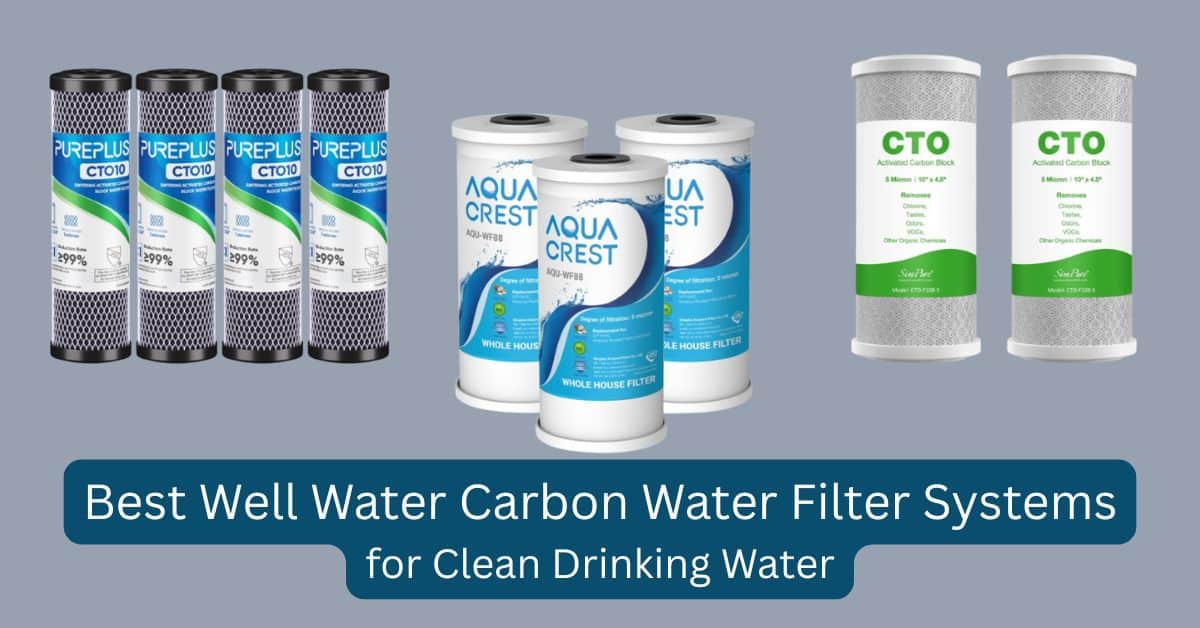
Compare well water carbon filters using published media type, flow rate, cartridge size, and contaminant-reduction claims.

Affiliate disclosure: Some links on this page are affiliate links. If you click an affiliate link and make a purchase, I may earn a small commission at no extra cost to you. I only recommend products I believe are useful to readers.
Activated carbon is useful when a well-water problem is chlorine, chemical taste, or odour; it is not a catch-all safety treatment. Dissolved minerals, bacteria, and viruses require other stages, so the starting water test determines whether carbon belongs in the system at all.
Carbon water filters are one of the most effective ways to remove chlorine, sediment, volatile organic compounds, and other impurities from well water. These filters use activated carbon to trap contaminants as water passes through, improving both water quality and taste.
Well water carbon filters come in various forms, including whole-house systems, under-sink units, and countertop models. Whole-house carbon filters treat all water entering your home, while point-of-use filters focus on specific taps or areas.
The type you choose depends on your water quality issues, household size, and budget. Carbon filters work especially well for removing chemical tastes and odors that make well water unpleasant to drink.
When shopping for a well water carbon filter, pay attention to the filter’s micron rating, flow rate, and replacement schedule. The micron rating determines what size particles the filter can remove, while flow rate affects water pressure throughout your home.
Filter lifespan varies based on water quality and usage, so consider ongoing replacement costs.
Best Well Water Carbon Filters
The picks below are organized using published specifications, stated performance claims, maintenance demands, and fit for different household use cases. I focused on carbon media type, cartridge size, flow-rate limits, and stated contaminant targets.
Table of Contents
ICEPURE Carbon Filter

Best for most homeowners who need a standard 10-inch carbon cartridge with broad housing compatibility.
Key specs: 1-micron CTO carbon cartridge; 10” × 4.5”; rated up to 30,000 gallons or 6 months; 1.2 kg (ICEPURE listing on Amazon)
Pros
- Removes over 99% of chlorine and significantly improves taste
- Works with dozens of different filter housing brands and models
- Lasts up to 6 months or 30,000 gallons before replacement
Cons
- Installation can be messy due to carbon dust residue
- May reduce water pressure slightly in some systems
- Requires regular monitoring to know when replacement is needed
PUREPLUS CTO Carbon Filter 4-Pack

Best for well water owners who need reliable chlorine and sediment removal at a reasonable price.
Key specs: 1-micron CTO carbon cartridges; 2.5” × 10” under-sink format; up to 13,000 gallons; 400 psi pressure-tested; 4-pack (PUREPLUS listing on Amazon)
Pros
- Removes chlorine taste and odors effectively from both city and well water
- Works with most standard 10-inch filter housings without compatibility issues
- Each filter lasts 3-6 months and handles up to 13,000 gallons
Cons
- Water flow becomes noticeably slower compared to basic sediment filters
- Filter performance varies significantly depending on your specific water quality
- Individual wrapping creates extra packaging waste during replacement
Waterdrop Whole House Water Filter System

Best for well water homes dealing with iron and manganese problems.
Key specs: 2-stage, 5-micron; 50,000-gallon capacity (up to 6 months); 1” inlet/outlet (Waterdrop WHF21-FG listing on Amazon); flow up to 15 GPM; reduces iron; manufacturer states up to 98.9% manganese and 95.6% chlorine reduction; 1-year warranty (Waterdrop – WHF21-FG Whole House Water Filter)
Pros
- Removes iron and manganese effectively from well water without frequent maintenance
- Filter cartridges last six months which saves money on replacements
- Installation process is straightforward with basic plumbing skills
Cons
- Water pressure drops slightly after installation compared to unfiltered flow
- Large size requires adequate space in your utility room or basement
- Initial setup cost is higher than basic sediment-only filters
ICEPURE CTO Carbon Filter 4-Pack

Best for whole-house systems on treated water that need a chlorine- and sediment-reducing CTO cartridge.
Key specs: 1-micron CTO carbon cartridges; 2.5” × 10”; up to 13,000 gallons; 4-pack (ICEPURE listing on Amazon)
Pros
- Water flow stays strong even with 1 micron filtration level
- Works with many different filter systems and brands
- Removes chlorine taste and smell effectively
Cons
- Clogs faster with well water that has mud and sand
- May need replacement sooner than 6 months with dirty water
- Not designed specifically for well water applications
PUREPLUS 5 Micron Whole House Water Filter

Best for municipal water users who want combined sediment and chlorine reduction from a standard 10” x 4.5” cartridge.
Key specs: 5-micron 10” × 4.5” sediment + carbon cartridges; up to 30,000 gallons; replace every 3-6 months; 2-pack (PUREPLUS listing on Amazon)
Pros
- Removes chlorine taste and odor from municipal water
- Easy installation process that fits most standard 10-inch filter housings perfectly
- Long-lasting design handles up to 30,000 gallons before needing replacement
Cons
- Not effective for well water treatment despite being marketed for it
- Doesn’t reduce total dissolved solids which some users expect
- Replacement schedule can be confusing based on actual water usage
SimPure Whole House Carbon Filter

Best for well water systems because it removes chlorine effectively and fits most standard housings.
Key specs: 5-micron coconut-shell carbon-block cartridges; 10” × 4.5”; replace 3-6 months; 2-pack (SimPure listing on Amazon)
Pros
- Removes 98% of chlorine and eliminates bad tastes and odors
- Works with many different filter housing brands and models
- Lasts 3-6 months of use
Cons
- May not handle heavy sulfur odors as well as expected
- Requires regular replacement every few months
- Filter capacity depends heavily on your water quality
Waterdrop Whole House Carbon Filter

Best for well water owners who need reliable iron and manganese removal at a reasonable price point.
Key specs: WF10FG 10” × 4.5” cartridge; listing states up to 99.3% iron and 96.8% manganese reduction; 6-month design life; 2-pack (Waterdrop WF10FG listing on Amazon)
Pros
- Listing states up to 99.3% iron and 96.8% manganese reduction
- Uses natural coconut shell carbon that eliminates bad taste and odors
- Compatible with many popular filter housing brands and systems
Cons
- Requires frequent filter changes every 2-4 months with high iron content
- Must be flushed multiple times during installation to prevent damage
- May not work as well for extremely high manganese levels
AQUA CREST FXHTC Carbon Filter

Best for well water systems.
Key specs: 5-micron carbon cartridges (FXHTC format); flow up to 4 GPM; up to 30,000 gallons / 3-6 months; 10” × 4.5”; 3-pack (AQUA CREST listing on Amazon)
Pros
- Works with many different filter systems from major brands like GE and Culligan
- Maintains strong water pressure at 4 GPM without noticeable drops
- Lasts up to 6 months or 30,000 gallons before needing replacement
Cons
- Installation can be messy when removing old filters
- May not remove all sulfur smells common in well water
- Requires regular monitoring to know when replacement is needed
PUREPLUS Coconut Shell Carbon Filter

Best for city water users who need chlorine removal. It’s not designed for well water applications.
Key specs: 5-micron coconut-shell carbon-block cartridges; 10” × 4.5”; 3-pack; the listing states NSF/ANSI 42 certification (PUREPLUS listing on Amazon)
Pros
- Removes chlorine taste and odor from city water
- Works with many different filter housing brands and models
- High capacity design filters up to 30,000 gallons before replacement
Cons
- Not suitable for well water despite being in this roundup
- Some filters may fail earlier than expected based on water conditions
- Higher price point compared to basic carbon filters
Brightify Carbon Water Filter

Best for well water users who need reliable chlorine and sediment removal.
Key specs: 5-micron CTO carbon cartridges; 10” × 2.5”; up to 15,000 gallons / 3-6 months; coconut-shell carbon; 4-pack (Brightify listing on Amazon)
Pros
- Works with many different filter systems and brands
- Removes chlorine taste and smell
- Lasts up to six months with good flow rate
Cons
- May clog faster with very dirty well water
- Packaging could be better to prevent damage
- Instructions are basic and not very detailed
PRO+AQUA Heavy Metals Well Water Filter Set

Best for well water owners who need reliable heavy metals removal and don’t mind the higher upfront cost.
Key specs: 3-stage replacement set (sediment + KDF/blend + carbon block); 20” × 4.5”; 5 micron (PRO+AQUA – Heavy Metals Well Water Filter Replacement Set); listing states up to 100,000 gallons (PRO+AQUA listing on Amazon)
Pros
- Removes multiple contaminants including heavy metals, chlorine, and sulfur odors effectively
- Works with any standard 20-inch whole house system without modifications
- Provides up to 100,000 gallons of filtered water before replacement
Cons
- Costs more than basic sediment filters but the performance justifies the price
- Installation requires turning off water supply and may need professional help
- Initial flush takes longer than expected to clear carbon dust
Aquasana Whole House Well Water System

Best for buyers who want a comprehensive whole-house carbon filtration system.
Key specs: rated for 500,000 gallons; flow up to 14.7 GPM; KDF (copper-zinc) + carbon media with UV; salt-free scale prevention; 57 in. tall x 11 in. diameter housing; 5-year limited warranty (Aquasana – Rhino Well Water with UV) (Aquasana listing on Amazon)
Pros
- Multi-stage filtration with UV technology effectively removes bacteria, viruses, and most contaminants
- Salt-free conditioning prevents scale buildup without harsh chemicals or maintenance
- Long-lasting filters handle 500,000 gallons over five years with minimal ongoing costs
Cons
- Works best only with moderate water hardness levels under 15 gpg
- Installation requires significant space and professional-grade plumbing skills
- Water pressure drops noticeably after installation
SimPure Whole House Filter Housing

Best for most well water systems because of its solid build and reliable performance over time.
Key specs: DB10P whole-house filter housing; 10” × 4.5” cartridges; 1” NPT port with pressure-release button; max flow 20 GPM; brass + polypropylene (SimPure DB10P listing on Amazon)
Pros
- Strong housing that doesn’t crack or leak at the mounting points
- Works with many different filter types for custom water treatment
- Simple setup with all needed tools included in the box
Cons
- Pressure relief valve can develop leaks after extended use
- Takes up more space than expected for installation and filter changes
- Replacement fittings cost almost as much as the whole housing
Buying Guide
Activated carbon in these filters is built to trap chlorine, bad taste, and odor — the effectiveness table below rates it excellent for both — but it doesn’t remove dissolved minerals, bacteria, or viruses reliably, and heavy-metal removal is inconsistent from unit to unit. That’s also why two of the picks above, the PUREPLUS 5 Micron Whole House Water Filter and the PUREPLUS Coconut Shell Carbon Filter, are flagged in their own listings as built for treated city water rather than well water — read past the headline claim to the fine print. Beyond that, fit comes down to three numbers: micron rating (the systems here run 1 to 5 microns), rated capacity before replacement (from 13,000 gallons up to 500,000), and how much the cartridge drops your water pressure once it starts loading up, which several buyers here reported even on new units.
Filter Capacity
Published capacity across the filters on this page spans roughly 13,000 to 500,000 gallons. Convert that rating into a replacement interval using household water use, then allow for dirty well water that can load the cartridge sooner than the headline number suggests.
Contaminant Removal
Use the well test to separate carbon’s strengths from problems it cannot solve. The comparison below rates chlorine and taste or odour highly, some chemicals as a qualified use, and bacteria or heavy metals as poor or limited targets.
| Contaminant Type | Carbon Filter Effectiveness |
|---|---|
| Chlorine | Excellent |
| Bad taste/odor | Excellent |
| Some chemicals | Good |
| Bacteria | Poor |
| Heavy metals | Limited |
Flow Rate
Check rated flow at whole-house demand and watch the pressure drop as the media loads with sediment. Several products reviewed here drew pressure complaints even when new, so capacity on paper does not replace a flow check at multiple fixtures.
Installation Requirements
A whole-house housing goes into the main service line and needs isolation and cartridge-change clearance; a point-of-use filter serves one fixture with a smaller plumbing change. Include that difference when comparing installation cost and treated-water coverage.
Maintenance Needs
Price the exact replacement cartridge and confirm it remains available before buying the housing. An indicator light can prompt service, but the filter’s gallon rating, elapsed time, and an observed pressure drop are the maintenance signals described across these systems.
Frequently Asked Questions
Carbon water filters for well water systems raise many questions about selection, installation, and performance. The answers below focus on the most common fit and maintenance questions.
Which well-water problems can activated carbon solve, and which need another treatment stage?
Use carbon for chlorine, chemical taste, and odour when the product’s stated claims match the water test. Add a separate treatment stage for bacteria, viruses, dissolved minerals, or a heavy-metal result that the selected cartridge does not specifically address.
Flow rate matters for your household size. A family of four needs a higher flow rate than a single person.
Filter capacity determines how long the carbon will last. Larger capacity filters need less frequent replacement but cost more upfront.
The type of carbon affects performance. Granular activated carbon is commonly used for chlorine and odor reduction. Solid carbon blocks can also capture smaller particles and some additional contaminants.
How do I determine the best whole house water filtration system for my well water needs?
Start by calculating your home’s peak water demand. That includes simultaneous use of showers, dishwashers, and washing machines.
Your well water test results guide system selection. High iron levels need pre-filtration before carbon. Bacterial contamination requires UV sterilization or chlorination.
Available space limits your options. Some systems need large tanks that won’t fit in small utility rooms.
Budget affects both initial cost and ongoing maintenance. More expensive systems often have lower operating costs over time.
Which carbon water filters are rated highest in consumer reports for well water?
Specific brand ratings change frequently based on new testing and product updates. Consumer Reports typically tests whole house systems every few years.
Top-rated systems usually feature certified carbon media and reliable flow rates. They maintain performance over their rated capacity without significant pressure drops.
Independent testing organizations like NSF International provide more consistent ratings. They test filters against specific contaminant removal standards.
Local water quality affects performance more than brand names. A highly-rated filter may still be a poor match for your specific well water conditions.
What maintenance is required for carbon filter systems in well water homes?
Replacing carbon filters every 6 to 12 months is recommended for most well water systems. Heavy use or high contaminant levels require more frequent changes.
Pre-filters need replacement every 2 to 3 months. These protect the carbon filter from sediment and extend its life.
System sanitization should happen during each carbon replacement. This prevents bacterial growth inside the filter housing.
Pressure gauge monitoring helps identify when filters become clogged. Dropping pressure indicates the need for maintenance.
Can you explain the effectiveness of carbon water filters in removing contaminants from well water?
Activated carbon is commonly used to reduce chlorine, volatile organic compounds, and many chemical taste or odor issues. Actual reduction depends on media type, contact time, and certification.
Carbon does not remove dissolved minerals, bacteria, or viruses reliably. Well water often contains these contaminants that need different treatment methods.
Heavy metals like lead show variable removal rates. Some carbon filters remove lead well, while others have limited effectiveness.
Contact time affects removal efficiency. Slower water flow through the carbon allows better contaminant absorption.
What are the common differences between point-of-entry and point-of-use carbon water filters for well water?
Point-of-entry systems install where water enters the home. These systems treat all water for drinking, bathing, and household use.
Point-of-use filters attach to individual faucets or appliances. They only treat water at that specific location.
Point-of-entry systems cost more initially but provide whole-house protection. They require larger carbon volumes and higher flow rates.
Point-of-use filters cost less and need smaller carbon cartridges.
Maintenance differs significantly between the two types. Point-of-entry systems need professional installation and larger replacement filters.

Thomas Peterson
Owner WSA
About the Author
Latest Posts
Born and raised in Nanaimo on Vancouver Island. Thomas gained a deep appreciation for the importance of clean, reliable water. With over 15 years of experience working with water treatment systems, Thomas has become a trusted expert in helping local homeowners and businesses resolve the unique challenges of well water across the Island.
From hard water and iron buildup to low water pressure and sediment issues, Thomas takes a practical, no-nonsense approach to solving water problems. Whether it’s installing filtration systems or troubleshooting well pump issues, Thomas focuses on long-lasting solutions that help people get the clean, safe water they need.
As a proud local professional, Thomas is dedicated to serving his community with honesty, quality service, and expert advice tailored to the water conditions of Vancouver Island.
Areas of Expertise: Well Service, Well Pumps, Water Filtration Systems
- Clack Water Softener Alternatives: Top Systems for Hard Water Treatment in 2025 November 8, 2025
- Best Well Water Test Kit Options for Safe Home Water Testing in 2025 November 5, 2025
- Best Well Water TDS Meter for Accurate Home Testing in 2025 November 1, 2025
- Best Well Water Sediment Filter Systems for Clean Home Water in 2025 October 29, 2025
- Best Well Water Saltless Water Softener Systems for 2025 October 26, 2025
Facebook Twitter LinkedIn Instagram Reddit
Fact Checked & Editorial Guidelines
The Fact Checking Process
I prioritize accuracy and integrity in my content. Here’s how I maintain high standards:
- Expert Review: All articles are reviewed by subject matter experts.
- Source Validation: Information is backed by credible, up-to-date sources.
- Transparency: I clearly cite references and disclose potential conflicts.
Your trust is important. Learn more about my fact checking process and editorial policy.
Reviewed by: Subject Matter Experts
The Review Board
The content is carefully reviewed by experienced professionals to ensure accuracy and relevance.
- Qualified Experts: Each article is assessed by specialists with field-specific knowledge.
- Up-to-date Insights: I incorporate the latest research, trends, and standards.
- Commitment to Quality: Reviewers ensure clarity, correctness, and completeness.
Look for the expert-reviewed label to read content you can trust.