
Best Well Water Filtration System for Clean Drinking Water
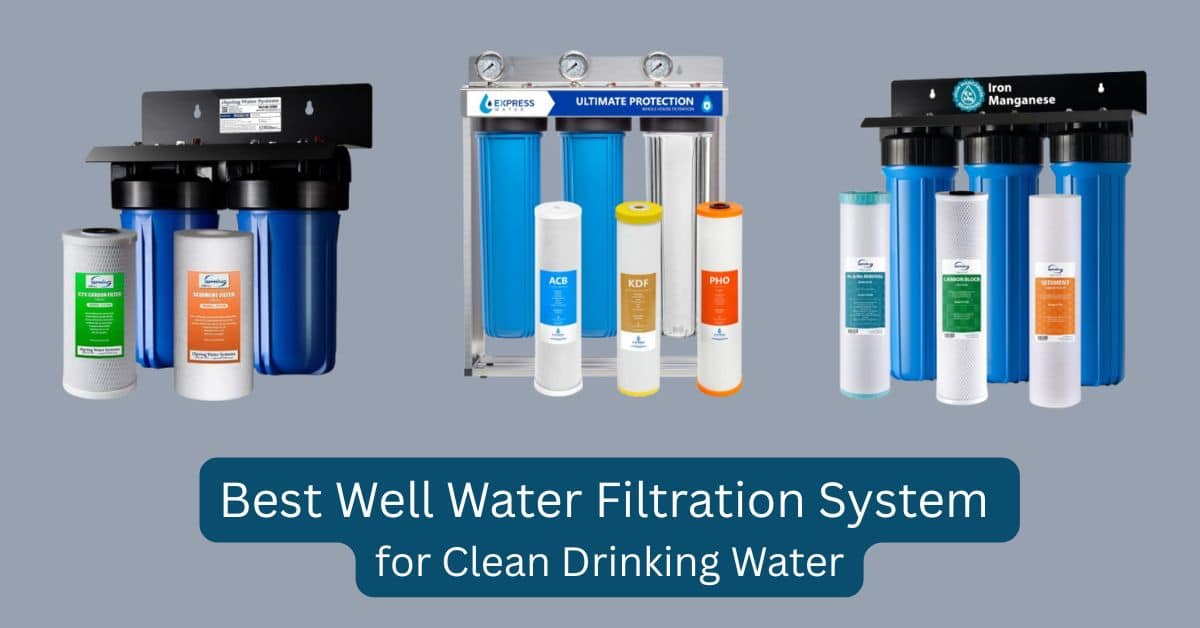
Ensure pure, safe drinking water with the Best Well Water Filtration System for clean water in every tap of your home.

Affiliate disclosure: Some links on this page are affiliate links. If you click an affiliate link and make a purchase, I may earn a small commission at no extra cost to you. I only recommend products I believe are useful to readers.
A whole-house well-water system should be assembled around a current test, because sediment, iron, sulfur, hardness, and bacteria need different treatment stages. On Vancouver Island and across rural British Columbia, the useful first question is what the well contains—not how many filters fit in one rack.
A good well water filtration system removes harmful substances while improving the water’s taste and smell.
Well water filtration systems work differently than city water filters because well water faces unique challenges. Common problems include iron, sulfur, bacteria, and hard minerals that cause stains and bad odours.
Some wells also have issues with sediment, nitrates, or other chemicals that seep into groundwater. The right filtration system targets these specific contaminants found in your water supply.
The most important factor when choosing a well water filtration system is getting your water tested first. Different wells have different problems, so you need to know what contaminants you’re dealing with before buying a filter. Health Canada’s Guidelines for Canadian Drinking Water Quality set the benchmarks used across the country for assessing what’s in your water.
You should also consider the system’s flow rate, maintenance requirements, and whether it needs electricity to operate.
Best Well Water Filtration Systems
I compared manufacturer specifications, filter media, stated contaminant-reduction claims, maintenance requirements, and published product information to identify strong well water filtration options for different homes.
HQUA WF3 Whole House System

Best for well water users who need reliable heavy metal removal and want helpful maintenance features.
Key specs: 3-stage Big-Blue system (WF3-01); rated 100,000 gallons; flow 3-15 GPM; operating pressure 25-116 PSI; change cartridges every 6 months (HQUA WF3-01 product listing – Amazon)
Pros
- Built-in timers and pressure gauges make filter maintenance simple to track
- Effectively removes heavy metals like lead and mercury along with sediment
- Large filter housings provide good flow rates up to 15 GPM
Cons
- Heavy Big-Blue housings make installation awkward for one person
- Limited reviews make long-term reliability unclear
- Takes up significant wall space
Express Water Ultimate Protection System

Best for most well water homes.
Key specs: 3-stage; rated for 100,000 gallons; flow 0.25 gal/s at 40-80 PSI (about 15 GPM); stainless-steel stand; activated carbon, KDF, and polyphosphate media; filter changes every 6-12 months (Express Water – Ultimate Protection Whole House Water Filter)
Pros
- Effectively removes heavy metals like lead and arsenic from every faucet
- Built-in anti-scale protection prevents costly pipe and appliance damage
- Heavy-duty stainless steel construction with pressure gauges for easy monitoring
Cons
- Takes up significant space with its large frame design
- Requires filter changes every 6-12 months which adds ongoing costs
- Does not reduce total dissolved solids without additional equipment
Waterdrop Whole House Water Filter

Best for well water with iron and manganese problems.
Key specs: 2-stage, 5-micron; 50,000-gallon capacity (up to 6 months); flow up to 15 GPM; 1” inlet/outlet; marketed for iron, manganese, and chlorine reduction; 1-year warranty (Waterdrop WD-WHF21-FG whole house water filter; WHF21-FG product listing – Amazon)
Pros
- Removes iron and manganese effectively from well water
- Six-month filter life saves money on replacements
- Simple installation process that most people can handle
Cons
- Some units develop leaks at connection points
- Teflon tape wrapping requires careful attention to prevent issues
- Pressure release button may drip initially
iSpring WGB32BM Iron Manganese Pro

Best for well water owners dealing with iron and manganese issues who want a reliable whole house solution.
Key specs: 100,000-gallon capacity; peak flow 15 GPM; working pressure 25-80 psi; 1” NPT ports; 3-stage design with 5-micron sediment; 1-year limited warranty (iSpring WGB32BM 3-Stage Whole House Water Filtration System)
Pros
- Effectively removes iron up to 3 ppm and manganese up to 1 ppm from well water
- Filter cartridges last three times longer than traditional greensand filters
- Easy DIY installation with clear instructions and helpful video guides
Cons
- Does not reduce total dissolved solids like reverse osmosis systems
- Requires regular filter changes every year for optimal performance
- Takes up significant space with its 55-pound weight and large dimensions
iSpring WGB21B Whole House Filter

Best for well water at a reasonable price point with simple DIY installation.
Key specs: 2-stage (WGB21B); 50,000-gallon capacity; first stage 5-micron sediment, second stage CTO carbon (90%+ chlorine reduction); 1” inlet/outlet; 30-day money-back and 1-year warranty (iSpring – WGB21B 2-stage whole house water filtration system)
Pros
- Quick installation process with pre-assembled components and clear instructions
- Effective two-stage filtering removes sediment, chlorine taste, and odors from all faucets
- Maintains healthy minerals in water without reducing beneficial dissolved solids
Cons
- Filter replacements can get expensive over time with regular use
- Takes up significant space with its large mounting system
- May not handle extremely heavy iron content as well as specialized iron filters
Aquaboon 3-Stage Whole House Water Filter

Best for buyers who want a well water filtration system with a simpler installation profile.
Key specs: 3-stage whole-house system; 5-micron 10” × 4.5” pleated sediment, carbon chlorine-reduction, and sediment-reducing stages; the listing states a 100,000-gallon capacity, a 15 GPM maximum flow rate, 19” L × 12” W × 25” H dimensions, and up to 99% chlorine reduction (Aquaboon 3-stage whole house filter – product listing)
Pros
- Double O-ring design is intended to reduce leak risk at housing connections
- Built-in pressure gauges help track when filters need changing
- Large-diameter housings help keep water pressure strong throughout the house
Cons
- Filter cartridges only last 6 months, which gets expensive
- System weighs over 34 pounds, making installation harder
- Limited to 1000 PPM water quality, which may not work for heavily contaminated wells
APEC ROES-50 Reverse Osmosis System

Best for well water owners who want reliable contaminant removal and don’t mind the slow flow rate.
Key specs: 5-stage WQA Gold Seal certified RO (ROES-50); 50-gallon/day rating; feed pressure 40-85 psi; extra-high-capacity pre-filter set (APEC – ROES-50 Essence Series; APEC ROES-50X product listing)
Pros
-
Manufacturer’s listed rating is up to 99% reduction of harmful contaminants (APEC – ROES-50 Essence Series)
-
WQA Gold Seal certified system Cons
-
Flow rate of 0.03 gallons per minute means filling a glass takes time
-
Five-stage system requires more filter replacements than simpler models
-
Under-sink installation needs dedicated space and may require drilling
AO Smith Whole House Water Filter

Best for families who want cleaner water throughout their entire home.
Key specs: AO Smith AO-WH-Filter whole-house carbon filter; rated for 600,000 gallons / 6 years; manufacturer’s listed rating is 96.9% reduction of chlorine taste and odor; flow rate 7 GPM; 29” H × 9” W × 9” D tank; activated-carbon media (A. O. Smith – Whole House Water Filter (AO-WH-Filter))
Pros
- Rated by the manufacturer to reduce 96.9% of chlorine taste and odor at every tap
- Filter cartridge is rated for six years or 600,000 gallons
- Single whole-house cartridge; replacement is needed roughly every six years
Cons
- Cannot remove iron, sulfur, or reduce total dissolved solids like some well water needs
- Flow rate drops to 7 gallons per minute which may not satisfy very large households
- Replacement filter must be purchased separately from the main unit
PRO+AQUA Heavy Duty Whole House System

Best for larger homes that need serious filtration power.
Key specs: 1 cu ft media tank; max flow 10 GPM; 1” stainless-steel ports; backwashing whole-house filter (PRO-WELL-1E) (PRO+AQUA – PRO-WELL-1E whole house well water filtration system; PRO-WELL-1E specifications – iFilters)
Pros
- Removes iron and sulfur smell that makes well water unpleasant to drink or shower with
- Digital display makes it easy to program and track when maintenance is needed
- Built in the USA with tough materials that can handle daily use for years
Cons
- Takes up a lot of space at almost 5 feet tall and needs room for installation
- Costs around $1500 which puts it out of reach for many homeowners
- Does not lower total dissolved solids so water may still taste different than city water
PRO+AQUA Elite 5-Stage Bundle

Best for serious well water problems.
Key specs: 5-stage bundle including an 80,000-grain softener (PRO-S-80E) plus RO; stated to suit households with 3-4 bathrooms; manufacturer states up to a 5-year standard warranty (extendable to 7 years with registration) and lifetime support (PRO+AQUA – Elite well water filter, softener and RO bundle)
Pros
- Tackles multiple water issues at once including iron, sulfur smell, and hardness
- Built with heavy-duty commercial-grade parts that feel sturdy
- Automatic regeneration reduces daily maintenance tasks
Cons
- Expensive upfront cost of nearly $2,000 may not fit all budgets
- Takes up significant space with its 325-pound, 5-foot tall footprint
- Some users report effectiveness dropping off after just a few weeks
WaterBoss Whole House Water Filter

Best for homeowners who want solid chlorine removal.
Key specs: WaterBoss whole-house filter (WB-WH-Filter); rated 600,000 gallons / 6 years; flow up to 7 GPM; operating pressure 20-100 psi; NSF/ANSI 42; manufacturer’s listed rating is up to 96.9% reduction of chlorine taste and odor (WaterBoss – WB-WH-FILTER product data sheet (PDF))
Pros
- Eliminates chlorine taste and smell effectively throughout the entire house
- Maintains strong water pressure even during heavy usage
- Simple installation process that most homeowners can handle
Cons
- Limited filtration beyond basic chlorine and taste improvement
- Carbon media amount seems minimal for the price point
- Not suitable for well water with high mineral content or bacteria
iFilters 2-Stage Well Water System

Best for medium homes.
Key specs: iFilters 2-stage well-water system (MWH-D20-WELL); 4.5” × 20” housings with 1” ports; 30-micron pleated sediment first stage; NSF-certified GAC/KDF media second stage (iFilters – MWH-D20-WELL dual-stage well water filtration system)
Pros
- Effective dual-stage design removes sediment, chlorine, and odors from well water
- Built for durability with commercial-grade components and heavy-duty mounting bracket
- Includes everything needed for installation with wrench and filters in the box
Cons
- Filter replacements can be expensive over time with ongoing maintenance costs
- Installation requires plumbing knowledge and may need professional help
- Large size means you might need to modify existing plumbing connections
Aquasure Harmony Water Softener

Best for households that want a whole-house system centered on conventional softening performance.
Key specs: 48,000-grain capacity; digital metered control head; 1” NPT or 3/4” NPT connections; sized for 4-5 bathrooms / 5-6 people (Aquasure – Harmony Series 48,000 grain whole house water softener)
Pros
- Digital control head makes programming and monitoring simple
- Removes hard minerals effectively while protecting appliances from scale damage
- Built-in pre-filter handles sediment and chlorine along with water softening
Cons
- Installation needs plumbing experience and may require professional help
- Heavy unit at 120 pounds makes moving it challenging
- Warranty issues reported when purchased through third-party sellers
Buying Guide
Every system above puts sediment removal first — a prefilter stage ahead of the carbon or iron-and-manganese media, on layouts from the 3-stage HQUA WF3 and iSpring WGB32BM down to the 2-stage iSpring WGB21B and iFilters MWH-D20-WELL — because a clogged sediment stage is what drags down flow rate everywhere downstream. Flow rate is the real household constraint: most of these systems are rated between 7 and 15 GPM, which covers a fixture or two running at once but gets tight in a house drawing from several taps at the same time.
Housing size varies across these systems: the HQUA WF3 uses Big-Blue cartridges, the iFilters unit uses 4.5” x 20” housings, and the Aquaboon uses smaller 10” x 4.5” cartridges — and change intervals follow the media more than the housing, running about six months on the HQUA and Aquaboon and up to a year on the Express Water and iSpring WGB32BM systems. A few, like the PRO+AQUA PRO-WELL-1E, skip cartridges altogether and backwash the media tank instead, at the cost of a taller footprint and a higher price. Whichever layout you choose, check port size — most of these connect with 1” NPT or 1” stainless fittings — against your existing plumbing.
Filter Types to Consider
Put sediment protection first when dirt or rust could clog later media, then add the stage that matches the test: carbon for taste and odour, iron media for rusty water, reverse osmosis for the listed dissolved contaminants, or UV disinfection for bacteria and viruses.
Important Features
| Feature | Why It Matters |
|---|---|
| Flow Rate | Keeps water pressure strong |
| Filter Life | Shows how often to replace parts |
| Maintenance | Easy upkeep saves time and money |
| Certifications | Proves the system works as claimed |
The systems compared here span about 7-15 GPM, with cartridge intervals from roughly six months to one year. Use those figures with the certification’s exact contaminant claim rather than comparing stage count alone.
Size and Capacity
Size for peak fixture demand within the 7-15 GPM range on this page, not only total daily gallons. Housing format matters too: the options include Big Blue, 4.5-by-20-inch, and 10-by-4.5-inch cartridges with different sediment capacity and service clearance.
Installation Requirements
Cartridge racks need correctly sized inlet fittings and room to drop each housing for service. Backwashing tanks add a drain requirement, and powered controls or UV stages add an outlet, so verify those connections before deciding the installation is a DIY fit.
Cost Considerations
Price the replacement set at the stated interval, not just the housings on day one. The cartridge systems here range from about six months to a year between changes, while the PRO+AQUA backwashing tank avoids cartridges but uses a taller footprint and higher purchase price.
Frequently Asked Questions
Which treatment stages belong in a whole-house system for sediment, iron, sulfur, or bacteria?
Start with the well test, place sediment removal ahead of media it could clog, and then add only the treatment the result supports: iron or sulfur media for those compounds, softening for hardness, and a disinfection stage when bacteria are present.
Water flow rate matters for your home’s daily usage. Most families need systems that handle 6-10 gallons per minute.
Filter replacement costs add up over time. Calculating annual maintenance expenses before buying helps compare systems more realistically.
System size affects installation location. Measure your basement or utility room space carefully.
How does the presence of iron in well water affect filtration system selection?
Iron levels above 0.3 parts per million cause staining and metallic taste. High iron content requires specialized filters.
Oxidizing filters are commonly used for iron removal. These systems convert dissolved iron into particles that filters can catch.
Sediment filters alone cannot handle dissolved iron. You need oxidation followed by filtration for effective iron removal.
Water softeners help with some iron but cannot handle high levels. Iron levels above 3-4 ppm need dedicated iron filters.
What are the typical costs associated with installing a well water filtration system?
Basic whole house systems cost between $1,500 and $3,000 for equipment. Installation adds another $500 to $1,500 depending on complexity.
Multi-stage systems with iron removal cost $3,000 to $6,000. UV sterilizers add $300 to $800 to the total price.
Annual filter replacements range from $100 to $400. More complex systems have higher maintenance costs.
Professional water testing costs $150 to $300.
Can you explain the importance of a proper filtration system diagram for well water setup?
System diagrams show the correct order for different filter stages. Sediment filters must come before carbon filters to prevent clogging.
Diagrams help show pipe routing and valve placement. That can prevent costly mistakes during installation.
Pressure tank location affects system performance. Diagrams help identify the best connection points.
Bypass valves let you service filters without shutting off water to your home. Proper placement is critical.
Which water filtration system features are essential for effective treatment of well water for a home?
Sediment filtration removes sand, dirt, and rust particles. This protects other system components from damage.
UV sterilization is often a strong fit for bacterial contamination. Well water can contain microorganisms that need disinfection rather than particle filtration alone.
Pressure gauges help monitor filter condition. Dropping pressure indicates when filters need replacement.
Automatic backwash systems clean themselves regularly. This reduces maintenance and extends filter life.
How do recent consumer reports rate the top whole house water filters for well water?
Consumer Reports and third-party testing are useful starting points, but buyers should confirm the exact contaminant certifications and capacity limits for the models they are considering.
For high iron content, the most relevant comparison points are the stated iron-reduction range, backwash requirements, and whether the system is designed for levels up to 8 ppm or higher.
Budget systems under $2,000 showed mixed results.
UV sterilizer reliability varied significantly between brands. Viqua and Trojan systems had the lowest failure rates in testing.

Thomas Peterson
Owner WSA
About the Author
Latest Posts
Born and raised in Nanaimo on Vancouver Island. Thomas gained a deep appreciation for the importance of clean, reliable water. With over 15 years of experience working with water treatment systems, Thomas has become a trusted expert in helping local homeowners and businesses resolve the unique challenges of well water across the Island.
From hard water and iron buildup to low water pressure and sediment issues, Thomas takes a practical, no-nonsense approach to solving water problems. Whether it’s installing filtration systems or troubleshooting well pump issues, Thomas focuses on long-lasting solutions that help people get the clean, safe water they need.
As a proud local professional, Thomas is dedicated to serving his community with honesty, quality service, and expert advice tailored to the water conditions of Vancouver Island.
Areas of Expertise: Well Service, Well Pumps, Water Filtration Systems
- Clack Water Softener Alternatives: Top Systems for Hard Water Treatment in 2025 November 8, 2025
- Best Well Water Test Kit Options for Safe Home Water Testing in 2025 November 5, 2025
- Best Well Water TDS Meter for Accurate Home Testing in 2025 November 1, 2025
- Best Well Water Sediment Filter Systems for Clean Home Water in 2025 October 29, 2025
- Best Well Water Saltless Water Softener Systems for 2025 October 26, 2025
Facebook Twitter LinkedIn Instagram Reddit
Fact Checked & Editorial Guidelines
The Fact Checking Process
I prioritize accuracy and integrity in my content. Here’s how I maintain high standards:
- Expert Review: All articles are reviewed by subject matter experts.
- Source Validation: Information is backed by credible, up-to-date sources.
- Transparency: I clearly cite references and disclose potential conflicts.
Your trust is important. Learn more about my fact checking process and editorial policy.
Reviewed by: Subject Matter Experts
The Review Board
The content is carefully reviewed by experienced professionals to ensure accuracy and relevance.
- Qualified Experts: Each article is assessed by specialists with field-specific knowledge.
- Up-to-date Insights: I incorporate the latest research, trends, and standards.
- Commitment to Quality: Reviewers ensure clarity, correctness, and completeness.
Look for the expert-reviewed label to read content you can trust.