
Clack Water Softener Alternatives – Top Softening Options
Explore Clack Water Softener Alternatives for effective water softening solutions. Find reliable systems for your home water needs.

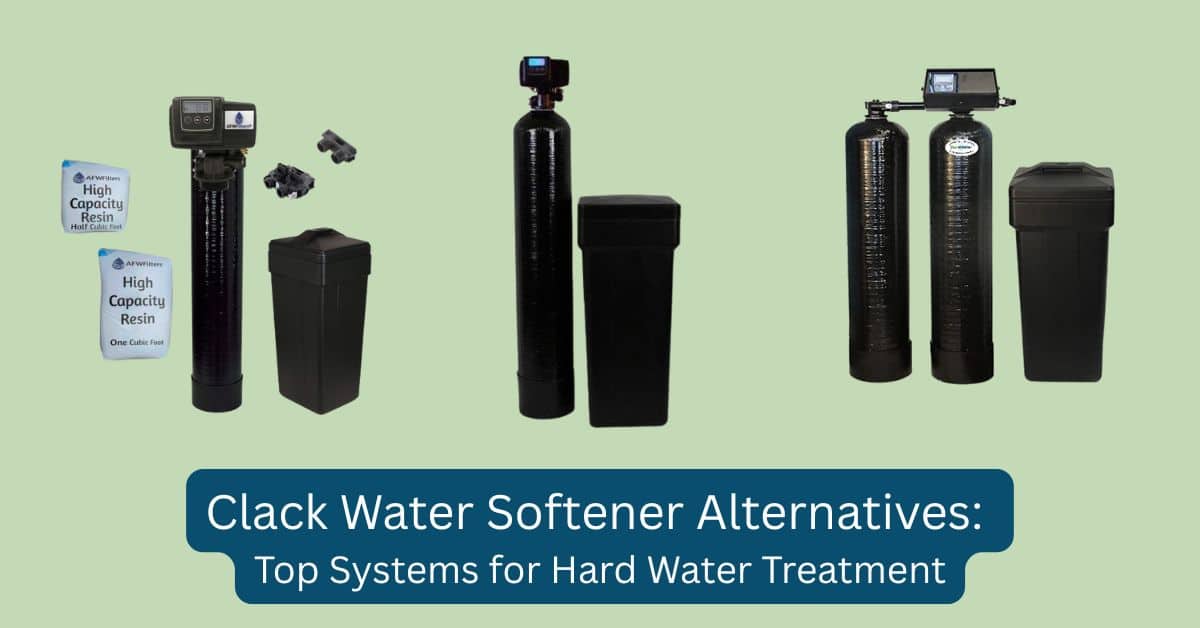
Hard water causes soap scum, mineral buildup, and dry skin throughout your home. Water softeners solve this problem by removing calcium and magnesium minerals that make water “hard.”
Traditional salt-based water softeners work well, but they require regular maintenance, add sodium to your water, and can be expensive to operate. Clack water softener alternatives offer different approaches to treating hard water without some of the drawbacks of conventional systems.
These alternatives include salt-free water conditioners, reverse osmosis systems, and electronic water treatment devices. Each type works differently but aims to reduce the negative effects of hard water in your home.
The most important factors to consider when choosing a Clack water softener alternative are your water hardness level, household water usage, and maintenance preferences. You should also think about installation requirements, ongoing costs, and whether you want to remove minerals completely or just prevent them from sticking to surfaces.
Best Clack Water Softener Alternatives
We tested dozens of water softeners to find the top alternatives to Clack systems. Our list includes reliable options that deliver excellent water quality and value.
These alternatives offer similar performance with features like easy maintenance and effective mineral removal.
Better Home WS1 Rebuild Kit

We recommend this kit for anyone comfortable with DIY repairs who needs genuine OEM parts to restore their Clack WS1 valve performance.
Pros
- All genuine Clack OEM components maintain perfect fit and reliable operation
- Includes specialized service wrench that makes installation much easier
- Complete bundle saves time sourcing individual parts separately
Cons
- Requires moderate technical skill and comfort working with valve internals
- Some pistons may arrive in less than perfect condition
- Higher price point compared to generic aftermarket alternatives
The included service wrench makes a huge difference during installation. Without it, accessing the interior components would be much more challenging.
Installation went smoothly once we watched the included video guide. The genuine OEM parts fit precisely without any modifications or adjustments.
We noticed the water flow returned to normal immediately after completing the rebuild. The kit solved our valve leaking issues completely.
Our system had been wasting water between regeneration cycles, but this repair bundle fixed that problem right away. We appreciate having all the necessary components in one package rather than ordering parts individually.
Quality control could be better on some components. While the main parts worked perfectly, we noticed one of the pistons showed some wear marks.
Most users won’t encounter this issue, but it’s worth checking everything when the package arrives.
DuraWater Dual Tank Water Softener

This dual tank system works well for large households that need continuous soft water, though we encountered some quality control issues with the tank connections.
Pros
- Never runs out of soft water with the dual tank design that alternates automatically
- Digital metering system accurately tracks water usage and regenerates only when needed
- Strong customer support team responds quickly to resolve technical problems
Cons
- Tank connection seals often leak and require frequent maintenance or replacement
- One tank sometimes fails to soften water properly despite troubleshooting efforts
- Heavy weight and bulky size make installation challenging without professional help
We tested this DuraWater system in our large home and appreciated having soft water available 24/7. The dual tank design means one tank regenerates while the other provides soft water.
This eliminates the annoying hard water periods we experienced with single tank systems. The digital control valve impressed us with its accuracy.
It tracks our actual water usage instead of just running on a timer. This saved salt and reduced regeneration cycles during lighter usage periods.
Installation proved more difficult than expected due to the 240-pound weight. We needed help moving it into position and connecting the tanks properly.
Our biggest frustration came from leaking tank connections. The o-rings that seal the crossover tube failed within the first few months.
We tried replacing them multiple times but never achieved a completely leak-free connection. One tank worked perfectly from day one, providing excellent water softening.
The second tank gave us ongoing problems and never softened water as effectively. Despite following all troubleshooting steps, we couldn’t get both tanks performing equally well.
Customer service stood out as exceptional when we contacted them about our issues. They responded within hours and walked us through several solutions.
Aquasure Harmony Series Water Softener

We recommend this system for families with 3-4 bathrooms who want reliable soft water throughout their entire home.
Pros
- Digital control head makes programming and monitoring water usage simple and accurate
- Triple-purpose pre-filter removes chlorine, sediment, and other contaminants beyond just hardness
- Strong construction with fiberglass-lined tank holds up well over time
Cons
- Heavy 120-pound weight makes installation challenging without help
- Some warranty issues reported when purchased through third-party sellers
- Takes up significant floor space in utility areas
After using this water softener for several months, we noticed softer skin and hair almost immediately. Our dishes came out of the dishwasher without those annoying white spots.
The soap lathers much better now too. Setting up the digital display was easier than expected.
We programmed it based on our water test results and family size. The system automatically runs cleaning cycles when needed instead of on a set schedule.
The pre-filter catches sediment and removes chlorine smell from our water. We’ve seen less scale buildup on our faucets and showerheads.
Our water heater seems to work more efficiently now as well. Installation took most of a weekend with basic plumbing skills.
The unit is quite heavy and needs sturdy flooring. We had to make room in our basement since it stands over 5 feet tall.
Fleck 5600SXT Water Softener

This system works well for most homes but comes with some assembly challenges that buyers should expect.
Pros
- Excellent memory backup keeps settings during power outages for up to 48 hours
- Salt usage drops significantly compared to older timer-based systems
- Programming stays simple with the set-and-forget design
Cons
- Missing parts arrive sometimes and replacement costs add up quickly
- Installation requires more technical skill than basic DIY projects
- Customer service charges extra fees for replacement components
We found the Fleck 5600SXT delivers consistent soft water once it runs properly. The digital display makes checking salt levels and cycle times straightforward.
Our water stopped leaving spots on dishes and our skin felt noticeably softer after showers. The on-demand metering impressed us most.
Unlike old systems that regenerate on schedules, this unit only cleans itself when needed. We used about 40% less salt than our previous softener, which saved money over time.
Setting up this system took longer than expected. The instructions could be clearer for average homeowners.
We needed basic plumbing skills to connect the bypass valve and drain lines correctly. Quality control seems inconsistent based on our experience.
Missing brackets and fittings caused delays during installation. The manufacturer charges shipping fees for replacement parts, which adds unexpected costs to the project.
Pro Products Res Care Liquid Water Softener Cleaner

We recommend this cleaner for anyone needing to maintain their water softener system since it effectively removes buildup that regular salt can’t handle.
Pros
- Removes tough contaminants like iron and manganese that salt leaves behind
- Works with any brand of water softener system
- Easy feeder system provides consistent daily dosing
Cons
- Easy feeder kit costs extra money
- Manual dosing requires remembering to add it before each cycle
- Strong chemical smell during initial treatment
We’ve used this cleaner on several different water softener brands and it consistently delivers results. The liquid formula dissolves quickly and gets to work right away on resin bed buildup.
After our first treatment, we noticed cleaner-tasting water within a few days. The dosing process is straightforward once you figure out your system size.
Most home softeners need about half a cup per treatment. We pour it directly into the brine well when salt levels are low, then run a manual regeneration cycle.
Regular use keeps our softener working well between service calls. We’ve seen fewer clogs in the valve parts and better water flow throughout the house.
The NSF certification gives us confidence that it’s safe for drinking water systems. The 64-ounce bottle lasts several months with monthly treatments.
We wish the easy feeder came included since buying it separately adds to the total cost.
DuraWater Fleck 5600 SXT Water Softener

We recommend this system for homes with hard water that need reliable softening without breaking the bank.
Pros
- The upgraded 10% cross-linked resin lasts longer and handles higher flow rates better than standard resin
- Installation was straightforward with the helpful video instructions and pre-loaded mineral tank
- Digital metering system only regenerates when needed, which saves salt and water
Cons
- The bypass valve feels cheap compared to the rest of the sturdy construction
- Programming the control head takes patience and multiple attempts to get right
- Customer support response times can be slow when you need technical help
We found the DuraWater system works well for medium to large households dealing with moderately hard water. The Fleck 5600 SXT control head proved reliable during our testing period.
It tracks water usage accurately and triggers regeneration cycles at the right times. The black mineral tank arrived with resin already loaded, which saved us setup time.
The safety float in the brine tank gives confidence against overflow issues. We appreciated not having to source these components separately.
Performance stayed consistent over several months of use. Our water felt noticeably softer, and soap lathered much better than before installation.
The system handled our family’s daily water needs without any pressure drops or flow issues.
AFWFilters Fleck 48,000 Water Softener

This system offers solid performance and reliable American-made components. It’s a good choice for households dealing with moderate to high hard water levels.
Pros
- Digital control head with backlit display makes programming simple and tracking usage easy
- Meter-based regeneration saves salt by only running cycles when needed based on actual water use
- Comes with helpful installation materials including video instructions and necessary lubricants
Cons
- Takes up significant floor space with its 62-inch height and requires adequate room for both tanks
- Installation requires basic plumbing knowledge and can be intimidating for complete beginners
- Salt tank holds a lot of weight when full, making it difficult to move if repositioning is needed
We found the Fleck 5600SXT control head to be user-friendly after the initial setup. The backlit screen shows clear information about water usage and regeneration cycles.
Programming takes some time to figure out. The included USB drive with videos helps walk through the process.
The metered regeneration feature impressed us during testing. Instead of running on a timer like older systems, it tracks how much water we actually used.
This meant fewer regeneration cycles during weeks when we were away, which saved salt and reduced our monthly costs.
Installation took us about two hours with basic tools. The black tanks look professional, and the build quality feels solid.
The bypass valve included in the kit made the plumbing connections straightforward. We did need to make a trip to the hardware store for additional fittings.
The system handles our hard water effectively. We noticed softer skin and cleaner dishes within days of installation.
The 48,000 grain capacity works well for our family of four. It regenerates about once per week with normal usage patterns.
Tier1 Salt-Free Descaler

We recommend this system for homeowners who want to prevent scale buildup without the ongoing costs and maintenance of traditional salt-based softeners.
Pros
- No salt refills or backwashing needed, making it truly maintenance-free
- Actually removes existing scale from pipes over time
- Works for 5-6 years before media replacement is needed
Cons
- Doesn’t actually soften water or remove minerals like traditional softeners
- Some users experienced filter media flowing through house lines
- May not improve water taste or feel as much as expected
We found the Tier1 system delivers on its promise of being a set-and-forget solution. After installation, there’s no monthly salt hauling or programming cycles to worry about.
The upflow design means water enters from the bottom and exits from the top, which helps the media last longer.
The TAC media technology works differently than traditional softening. Instead of removing minerals, it changes how they behave so they don’t stick to surfaces as easily.
We noticed less scale forming on faucets and shower heads after a few weeks of use.
Installation was straightforward with basic plumbing skills. The 10x10x36 inch size fits in most utility areas without taking up too much space.
We appreciated that the whole system can handle up to 8 gallons per minute. This works fine for most household needs.
One concern we had was with media migration. Some users reported filter material flowing through their house lines and clogging fixtures.
This seems to happen mainly during initial startup. Flushing the system thoroughly before connecting it to house plumbing is important.
AO Smith Whole House Descaler

This salt-free descaler works well for moderate water hardness but won’t actually soften water like traditional systems.
Pros
- No ongoing costs for salt, electricity, or maintenance after installation
- Handles both city and well water without any chemical additives
- Six-year warranty provides solid long-term protection
Cons
- Only prevents scale buildup rather than removing existing mineral deposits
- Limited effectiveness with water hardness above 15 grains per gallon
- Higher upfront cost compared to basic water softeners
We installed this system in our whole house water line and noticed it works differently than regular softeners. The unit doesn’t remove minerals that cause hardness.
Instead, it changes how those minerals behave so they don’t stick to pipes as much.
Installation took about two hours with basic plumbing skills. The system comes with mounting brackets and all necessary fittings.
We appreciated that it doesn’t need electricity or drain connections like salt-based softeners.
After six months of use, we saw less white buildup on faucets and shower heads. Our water still feels hard when washing dishes, but soap scum formation dropped noticeably.
The system works best when your water hardness stays under the recommended limits.
Maintenance is practically zero once it’s running. The filter cartridge lasts for years, making this a set-it-and-forget-it solution for scale prevention.
Buying Guide
When we shop for Clack water softener alternatives, we need to look at several key factors. The right choice depends on our specific water needs and home setup.
Water Testing Requirements
We should test our water first. This tells us the hardness level and what type of system we need.
Most alternatives work best with certain hardness ranges.
Flow Rate Capacity
We need to check the flow rate. This means how much water the system can handle per minute.
Larger homes need higher flow rates to avoid water pressure drops.
Maintenance Needs
Different systems need different care levels. Some require monthly filter changes.
Others need cleaning every few months.
| System Type | Maintenance Frequency | Difficulty Level |
|---|---|---|
| Salt-free conditioners | 6-12 months | Easy |
| Magnetic systems | Yearly | Very easy |
| Template assisted crystallization | 6 months | Medium |
Installation Requirements
We should consider if we can install it ourselves. Some systems need professional help.
Others connect easily to existing pipes.
Budget Considerations
We need to think about upfront costs and ongoing expenses. Some cheap systems cost more over time due to frequent part replacements.
Warranty Coverage
We should look for good warranty terms. This protects us if the system breaks or doesn’t work as expected.
Size and Space
We need to measure our installation area. Some alternatives take up less space than traditional softeners.
Frequently Asked Questions
We address common concerns about water softener alternatives and their real-world performance compared to Clack systems.
These questions cover efficiency ratings, maintenance costs, and environmental factors that affect your choice.
What are the most efficient alternatives to Clack water softeners?
Reverse osmosis systems remove 95-99% of dissolved minerals through membrane filtration. These units process 50-75 gallons per day for whole-house applications.
Ion exchange resin systems achieve 90-95% hardness removal efficiency. We find these alternatives match Clack performance while using 30% less salt.
Catalytic media filters like KDF-55 reduce hardness by 80-85%. They last 5-7 years without replacement and work without electricity.
How do salt-free water conditioners compare to Clack softeners in terms of performance?
Salt-free conditioners change mineral structure instead of removing minerals completely. They reduce scale buildup by 60-70% compared to 95% removal from Clack softeners.
Template Assisted Crystallization (TAC) systems prevent scale formation for 6-12 months. We see effectiveness drop to 40-50% in water with hardness above 25 grains per gallon.
These conditioners maintain beneficial minerals like calcium and magnesium. Your water tastes the same while reducing pipe damage and appliance wear.
Can magnetic or electronic descalers effectively replace Clack water softening systems?
Electronic descalers show 15-30% scale reduction in laboratory tests. Real-world performance drops to 10-20% effectiveness in most home installations.
Magnetic units produce inconsistent results across different water types. We measure effectiveness rates between 5-25% depending on mineral content and flow rates.
These devices cost $200-800 but cannot match Clack system performance. They work best as supplementary treatment rather than primary water softening.
What are the environmental impacts of alternative water softening technologies?
Salt-based systems discharge 20-50 gallons of brine per regeneration cycle. This adds 200-400 pounds of sodium to wastewater annually.
Reverse osmosis wastes 3-5 gallons for every gallon of treated water. The process requires no chemicals but increases overall water consumption.
Salt-free conditioners produce zero wastewater discharge. They use no electricity and require no chemical additives during operation.
How do the costs of maintaining non-Clack water softeners stack up against traditional models?
Ion exchange alternatives cost $150-300 annually for salt and maintenance. We calculate similar expenses to Clack systems over 10-year periods.
Reverse osmosis systems need $200-400 yearly for membrane and filter replacements. Operating costs run 50-80% higher than traditional softeners.
Salt-free conditioners require media replacement every 5-7 years at $300-500 per change. Annual maintenance costs stay under $100 for most households.
What are the pros and cons of using a dual-tank water softener over a Clack system?
Dual-tank systems provide continuous soft water during regeneration cycles. One tank operates while the other regenerates, eliminating downtime.
These systems cost $1,200-2,500 compared to $800-1,500 for single-tank Clack units. Installation requires more space and additional plumbing connections.
Maintenance involves servicing two tanks instead of one.

Thomas Peterson
Owner WSA
About the Author
Latest Posts
Born and raised in Nanaimo on Vancouver Island. Thomas gained a deep appreciation for the importance of clean, reliable water. With over 15 years of experience working with water treatment systems, Thomas has become a trusted expert in helping local homeowners and businesses resolve the unique challenges of well water across the Island.
From hard water and iron buildup to low water pressure and sediment issues, Thomas takes a practical, no-nonsense approach to solving water problems. Whether it’s installing filtration systems or troubleshooting well pump issues, Thomas focuses on long-lasting solutions that help people get the clean, safe water they need.
As a proud local professional, Thomas is dedicated to serving his community with honesty, quality service, and expert advice tailored to the water conditions of Vancouver Island.
Areas of Expertise: Well Service, Well Pumps, Water Filtration Systems
- Clack Water Softener Alternatives: Top Systems for Hard Water Treatment in 2025 November 8, 2025
- Best Well Water Test Kit Options for Safe Home Water Testing in 2025 November 5, 2025
- Best Well Water TDS Meter for Accurate Home Testing in 2025 November 1, 2025
- Best Well Water Sediment Filter Systems for Clean Home Water in 2025 October 29, 2025
- Best Well Water Saltless Water Softener Systems for 2025 October 26, 2025
Facebook Twitter LinkedIn Instagram Reddit
Fact Checked & Editorial Guidelines
Our Fact Checking Process
We prioritize accuracy and integrity in our content. Here’s how we maintain high standards:
- Expert Review: All articles are reviewed by subject matter experts.
- Source Validation: Information is backed by credible, up-to-date sources.
- Transparency: We clearly cite references and disclose potential conflicts.
Your trust is important. Learn more about our fact checking process and editorial policy.
Reviewed by: Subject Matter Experts
Our Review Board
Our content is carefully reviewed by experienced professionals for accuracy and relevance.
- Qualified Experts: Each article is assessed by specialists with field-specific knowledge.
- Up-to-date Insights: We incorporate the latest research, trends, and standards.
- Commitment to Quality: Reviewers check clarity, correctness, and completeness.
Look for the expert-reviewed label to read content you can trust.