
How Long Can I Run My Well Pump to Fill a Pool? (Best Guide)
How long can I run my well pump to fill a pool? Filling a swimming pool with well water can be a practical and cost-effective solution.

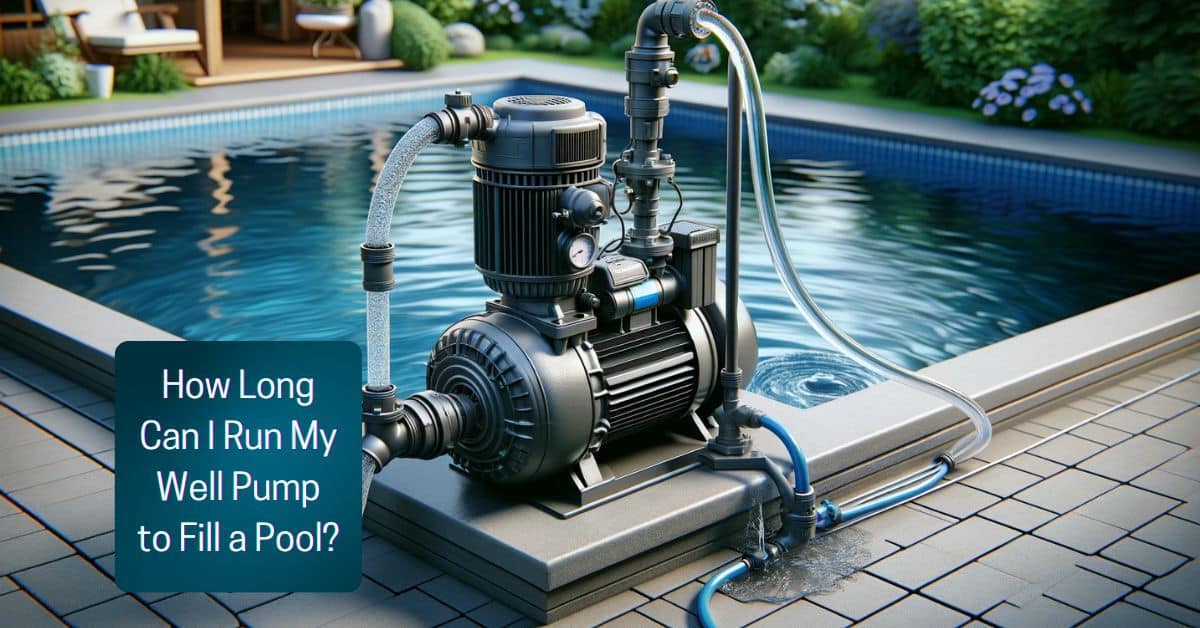
Filling a swimming pool with well water can be a practical and cost-effective solution. In most cases, you can run your well pump continuously for about 24 hours to fill an average-sized pool, depending on the pump’s capacity and your well’s supply. However, it’s important to consider how this might affect both your well’s performance and water quality.
I understand there are many factors that play into this process. Your pool’s size, demand from household appliances, and the health of your well can dictate how long you can safely run your pump. I’ve seen situations where people had to think ahead to avoid running their well dry or facing issues with water quality.
It’s critical to plan this fill process carefully to make sure you have enough water without damaging your equipment. Here are the key factors to keep in mind for a smooth, efficient pool-filling experience.
Understanding Your Water Supply
When filling a pool, knowing about your water supply is essential. If you’re using well water, the depth of your well and the water table can significantly affect how long your pump runs.
I’ve seen wells that can draw water from a deep aquifer. The deeper the well, the more work the pump has to do. It’s like lifting a bucket from a well; the deeper it is, the harder you have to pull.
If you’re relying on municipal water, you usually won’t face the same depth issues. Municipal systems are designed to deliver water efficiently, so you can fill that pool without much hassle.
Here are a few points to consider:
- Well Depth: Deeper wells may take longer to fill up your pool.
- Water Table: A high water table means your pump won’t run as hard.
- Pump Capacity: The pump’s horsepower will also impact the flow rate.
I often recommend checking the flow rate of your well pump. If it’s around 8 gallons per minute, it could take you about 24 hours to fill a standard pool, assuming no interruptions. Always keep an eye on your pump’s performance, as continuous use can wear it out faster. Knowing your supply helps maintain a smooth filling process while keeping your equipment in top shape.
The Role of Well Pumps
Well pumps are essential for drawing water from underground sources. Understanding their role helps in effectively filling a pool or meeting other water needs. Here’s what you should know about the specific types of well pumps, their capacity, recovery rates, and how well depth and the water table affect their performance.
Types of Well Pumps
For well pumps, there are a few main types to know about. The most common are submersible pumps and jet pumps.
- Submersible Pumps: These are installed underground and can push water to the surface. They’re suitable for deeper wells.
- Jet Pumps: Typically found above ground, these pumps are best for shallower wells. They pull water up using suction.
Each type has its strengths and weaknesses, depending on your well’s characteristics. Choosing the right pump type is important for efficient operation.
Determining Your Well Pump’s Capacity
To fill my pool efficiently, I need to understand my well pump’s capacity. Capacity is usually measured in gallons per minute (GPM).
Factors affecting capacity include:
- The pump design
- The power of the motor
- The condition of the plumbing system
A good estimate of how quickly I can transfer water is vital for planning. If I know my pump’s GPM, I can calculate how long it will take to fill the pool. Making sure my pump operates within its limits prevents burnout and damage.
Assessing the Well Recovery Rate
The well recovery rate is critical in determining how much water I can draw without depleting the source. It measures how quickly the well replenishes water after pumping.
To assess the recovery rate:
- Measure the water level: Before and after pumping for a set time.
- Calculate the difference: This tells me how much water I can expect to regain.
A higher recovery rate means I can pump water for longer periods without risking the well running dry. This is especially important if I’m filling a large pool.
Impact of Well Depth and Water Table
Well depth and the location of the water table play significant roles in well pump performance.
- Well Depth: A deeper well means more water needs to be drawn up, which can affect pump choice and longevity.
- Water Table: This is the level below which the ground is saturated with water. If the water table is low, my pump may have to work harder, leading to potential issues.
It’s essential to monitor these factors to make sure my well pump operates efficiently. Knowing the depth of my well and the condition of the water table will help me make informed decisions about filling my pool and maintaining my well system.
Calculating Pool Volume and Water Requirements
When filling a swimming pool, it’s important to know the pool’s volume and the water requirements for the job. By understanding how to estimate your pool size and calculate the necessary water volume, I can maintain a smooth and efficient filling process.
Estimating Pool Size
To estimate the pool size, I start by measuring its dimensions. For rectangular pools, I multiply the length, width, and average depth using the formula:
[ \text{Volume} = \text{Length (m)} \times \text{Width (m)} \times \text{Average Depth (m)} ]
For oval pools, the calculation is:
[ \text{Volume} = \text{Length (m)} \times \text{Width (m)} \times \text{Average Depth (m)} \times 0.89 ]
For round pools, I use:
[ \text{Volume} = \pi \times \left(\frac{\text{Diameter (m)}}{2}\right)^2 \times \text{Average Depth (m)} ]
Knowing the pool size helps me determine how much water I need to fill it efficiently, allowing for better planning.
Understanding Water Volume
Once I’ve estimated the pool size, I focus on calculating the water volume. The volume is measured in litres or gallons, depending on the local water supply system.
To fill a pool, I divide the total volume by the flow rate of my well pump, usually given in litres per minute (LPM) or gallons per minute (GPM). This calculation gives me an idea of how long it will take to fill the pool.
For example, using a 1,500-litre pool with a pump flow rate of 15 LPM:
[ \text{Time to Fill} = \frac{1500 \text{ L}}{15 \text{ LPM}} = 100 \text{ minutes} ]
By breaking it down like this, I can efficiently plan my time and resources.
Water Quality Considerations
When filling a pool with well water, it’s important to think about the quality of that water. Two key aspects to consider are sediment and mineral content, as well as whether the water has been pre-chlorinated or not. These factors can impact the water clarity and overall safety for pool use.
Sediment and Mineral Content
I’ve seen firsthand how sediment can create problems in pools. Well water often carries sediments, like sand or silt, which can cloud the water. This leads to a dirty pool, requiring more maintenance. It may also clog filters, forcing them to work harder.
Mineral content is another important factor. Elements like iron and manganese can stain pool surfaces and create unsightly marks. You might notice brown or black staining on your pool liner or tiles; this is usually a sign of mineral buildup. To keep my pool looking great, I often test my well water for these minerals before filling up the pool.
Pre-Chlorinated vs. Well Water
When using well water, I prefer to understand the differences compared to pre-chlorinated water from municipal sources. Pre-chlorinated water often has added chemicals that help eliminate harmful bacteria and pathogens.
In contrast, well water might be free of these chemicals but could still contain microbes. If I choose well water, I’m careful to test for bacteria and have a plan for treatment if needed. Using well water might require me to add some chlorine myself to keep the pool safe and clean.
Impact on Pool Maintenance
Running a well pump to fill a pool brings important responsibilities for ongoing maintenance. Proper water quality and managing loss through evaporation are key to keeping your pool in good shape.
Managing Water Quality
Water quality is important for a safe swimming environment. When filling your pool with well water, I take careful notes on what I’m adding.
I regularly check pH levels, which should be between 7.2 and 7.8. If it’s too low or high, I adjust it using chemicals like muriatic acid or soda ash.
It’s also important to monitor chlorine levels, ideally between 1 and 3 ppm, to keep bacteria at bay. Filtering and running the pump regularly will help keep the water clear and free of debris.
I make it a point to have my well water tested for contaminants, making sure it’s safe for swimming. This way, I can enjoy my pool while maintaining a healthy environment.
Preventing Water Loss and Evaporation
Water loss can be a major concern, especially in the summer. I pay attention to factors that contribute to evaporation and take steps to minimize it.
Using a pool cover when the pool isn’t in use drastically reduces evaporation. Sun covers can also help retain heat, which means less energy is wasted keeping the pool warm.
Maintaining proper water levels is another priority. I regularly check that my skimmers and overflow drains are working correctly. This makes sure that water is not lost through leaks or overflows.
Additionally, adding landscaping or trees around the pool can create windbreaks, further reducing evaporation rates. By staying proactive, I keep my pool full and my maintenance efforts efficient.
Planning the Fill Process
Filling your pool with well water requires some thoughtful preparation. I’ll share what I’ve found important in timing and best practices, along with how to monitor your water supply effectively.
Timing and Best Practices
First, consider the timing of your fill process. I recommend filling your pool early in the day or late in the evening. This helps avoid peak evaporation from the sun.
Next, check your well’s water flow rate. If your pump delivers around 8 gallons per minute, aim to fill your pool strategically, allowing breaks for the pump to recover. Running it continuously for too long can stress the pump.
To protect your equipment, set the fill to run for a few hours, then check the water level. This way, you’re not only filling the pool efficiently but also preventing unnecessary wear on your well pump.
Monitoring Your Supply
Keeping an eye on your water supply is important. I suggest using a simple timer or clock to track how long the pump has been running.
As you fill, periodically check the well’s water level if possible. If it drops significantly, it may be time to pause the filling. This helps make sure you don’t completely deplete your well.
When using a garden hose, remember that its diameter and length can impact the flow rate. For optimal flow, choose a hose that is in good condition and avoid long, tangled distances.
Stay vigilant and listen for any unusual sounds from the pump. This can help catch any potential problems early.
Equipment and Safety Precautions
When filling a pool with well water, it is important to pick the right equipment and take necessary safety precautions. This makes sure that the process runs well and safely. Here’s what I consider essential for a successful fill-up.
Selecting the Right Hose and Adapters
Choosing the right garden hose makes a big difference. I recommend a heavy-duty hose that can handle pressure without kinks. Look for hoses with a diameter of at least 5/8 inch. This size allows for better water flow, which means faster filling.
Adapters are equally important. Check the connections between your hose and the well pump. Make sure they fit snugly to prevent leaks. Use thread tape to seal any threaded connections, avoiding unexpected spills.
Always check the hose for any damage before use. A frayed or cracked hose can lead to water loss and inefficiency. If you find issues, replace it right away to maintain a smooth operation.
Using a Pressure Tank
A pressure tank is a wise addition when filling a pool. It helps regulate water pressure and prevents the pump from running constantly. By storing water, it gives your pump a break, which can extend its life.
Installing a pressure switch can automatically turn the pump on and off when needed. This setup prevents overworking the pump and can save on electricity costs. I make sure my pressure tank is sized correctly for my pool’s water needs—typically, a 20-gallon tank is a solid choice for average-sized pools.
Regular maintenance of the pressure tank is key. This includes checking the air pressure and inspecting for leaks. Keeping everything in top shape makes the filling process efficient and safe.
Environmental and Legal Considerations
When filling a pool using a well pump, it’s important to keep in mind the local rules and the need for responsible water use. These aspects can affect how I manage my water resources and make sure I stay compliant with regulations.
Understanding Local Regulations
Local regulations around water usage can vary widely. I always check with my municipality to understand the specific laws regarding well water use. Some areas may restrict when I can use my well, especially during droughts or peak demand times.
It’s important for homeowners like me to know the potential fines for non-compliance. This might include limitations on the volume of water I can extract daily or seasonal restrictions. Often, municipalities have guidelines that dictate how long I can run my well pump continuously. Staying informed prevents unnecessary penalties and helps me maintain good standing in my community.
Maintaining Sustainable Water Use
Sustainable water use is vital for preserving our local water supplies. I need to be mindful that overusing my well water can deplete it faster than it can be replenished.
Using a pressure tank and pressure switch can help control my pump’s operation. This setup prevents continuous running and protects my pump’s lifespan. Additionally, I should consider the environmental impact of using municipal water sources when available. Relying on well water exclusively could strain local aquifers, so balancing this with other sources is necessary.
By understanding both regulations and sustainability, I can make informed choices that benefit my home and the environment.
Frequently Asked Questions
For running your well pump to fill a pool, there are several important factors to consider. I’ll address common concerns about pump damage, safe operation times, and the signs that indicate whether your pump is being overworked.
Is running your well pump continuously for pool filling a risk for pump damage?
Yes, running your well pump continuously can pose a risk for damage. Pumps are designed to operate for extended periods, but constant use without breaks can lead to overheating or wear.
Taking breaks allows the pump to cool down and reduces stress on its components. Monitoring your pump’s performance during prolonged use is essential to make sure it’s working well.
What’s the safe duration to operate a well pump for transferring well water to a pool?
The safe duration to run your well pump will depend on its capacity and the size of your pool. Typically, you can run the pump for about 12 to 24 hours.
However, check your pump’s specifications for its recommended operating times. It’s important to find balance and avoid pushing your equipment beyond its limits.
How much continuous run time should a water pump handle without taking a break?
Most well water pumps can handle continuous operation for 8 to 12 hours. If you notice any abnormal sounds or a decrease in water flow, it may be time for a break.
This downtime helps to prevent overheating and keeps the pump functioning efficiently over time.
Could long-term operation of a well pump lead to system failure?
Yes, long-term operation can lead to system failure if the pump is not adequately maintained. Continuous strain can cause mechanical failures in components such as the motor or impeller.
Regular maintenance checks and maintaining proper cooling periods will help extend the life of your pump.
At what point does operating a well pump become excessive when filling a pool?
Operating a well pump becomes excessive when it runs non-stop beyond its recommended operating time, typically exceeding 24 hours.
You should also consider the capacity of your well. If it can’t keep up with the demand, it might not be able to fill the pool efficiently, risking damage to the pump.
What are the signs to watch for that indicate a well pump is overworked during pool filling?
Watch for signs like unusual noises, decreased water pressure, or frequent cycling on and off.
If the pump suddenly stops or the flow becomes erratic, these could indicate it’s being overworked. Always pay attention to your equipment and perform regular checks to catch potential problems early.

Thomas Peterson
Owner WSA
About the Author
Latest Posts
Born and raised in Nanaimo on Vancouver Island. Thomas gained a deep appreciation for the importance of clean, reliable water. With over 15 years of experience working with water treatment systems, Thomas has become a trusted expert in helping local homeowners and businesses resolve the unique challenges of well water across the Island.
From hard water and iron buildup to low water pressure and sediment issues, Thomas takes a practical, no-nonsense approach to solving water problems. Whether it’s installing filtration systems or troubleshooting well pump issues, Thomas focuses on long-lasting solutions that help people get the clean, safe water they need.
As a proud local professional, Thomas is dedicated to serving his community with honesty, quality service, and expert advice tailored to the water conditions of Vancouver Island.
Areas of Expertise: Well Service, Well Pumps, Water Filtration Systems
- Clack Water Softener Alternatives: Top Systems for Hard Water Treatment in 2025 November 8, 2025
- Best Well Water Test Kit Options for Safe Home Water Testing in 2025 November 5, 2025
- Best Well Water TDS Meter for Accurate Home Testing in 2025 November 1, 2025
- Best Well Water Sediment Filter Systems for Clean Home Water in 2025 October 29, 2025
- Best Well Water Saltless Water Softener Systems for 2025 October 26, 2025
Facebook Twitter LinkedIn Instagram Reddit
Fact Checked & Editorial Guidelines
Our Fact Checking Process
We prioritize accuracy and integrity in our content. Here’s how we maintain high standards:
- Expert Review: All articles are reviewed by subject matter experts.
- Source Validation: Information is backed by credible, up-to-date sources.
- Transparency: We clearly cite references and disclose potential conflicts.
Your trust is important. Learn more about our fact checking process and editorial policy.
Reviewed by: Subject Matter Experts
Our Review Board
Our content is carefully reviewed by experienced professionals for accuracy and relevance.
- Qualified Experts: Each article is assessed by specialists with field-specific knowledge.
- Up-to-date Insights: We incorporate the latest research, trends, and standards.
- Commitment to Quality: Reviewers check clarity, correctness, and completeness.
Look for the expert-reviewed label to read content you can trust.