
How to Remove Chlorine From Water – Simple Methods
Learn how to remove chlorine from water effectively. Improve taste and safety with easy, proven water treatment methods.

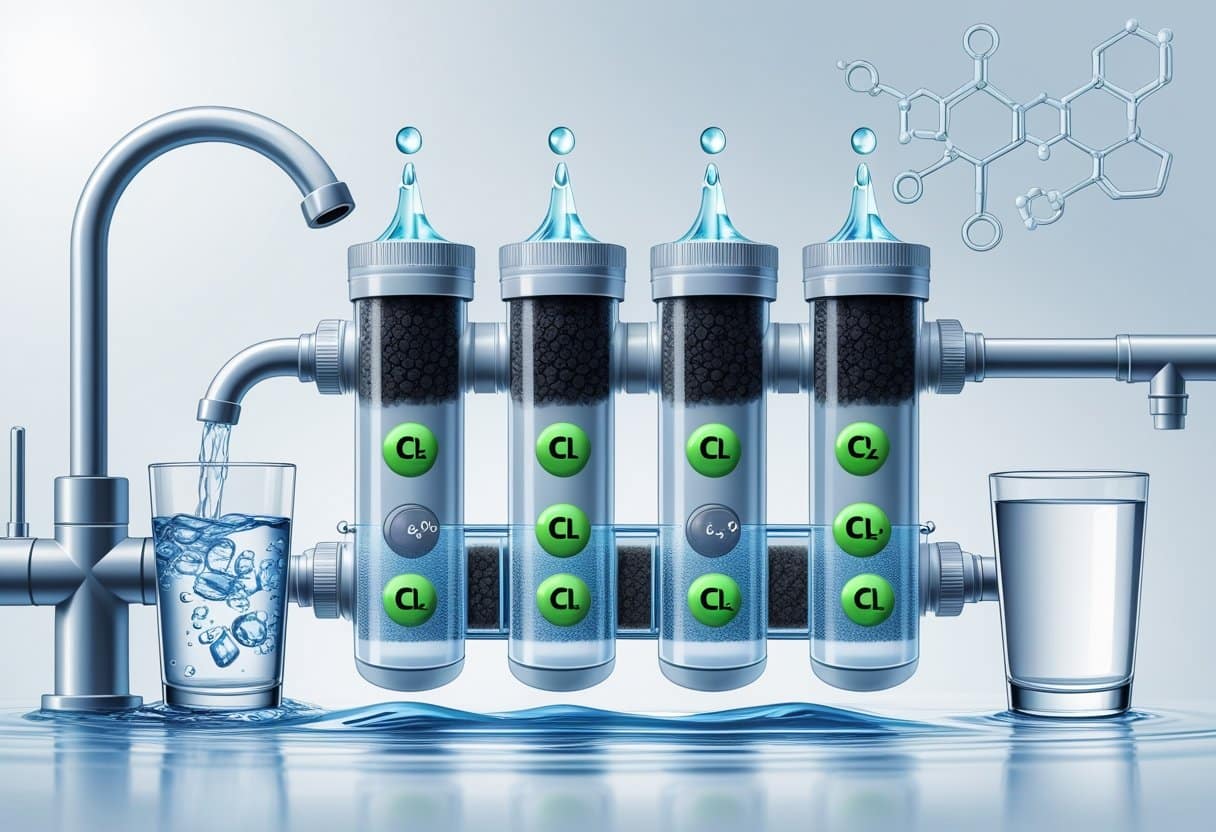
Chlorine keeps our drinking water safe by killing harmful bacteria and viruses. Many of us want to remove its taste and smell from our tap water.
We can effectively remove chlorine from water using methods like boiling, activated carbon filters, reverse osmosis systems, or simply letting water sit out for 24 hours.
The good news is that most chlorine removal methods are simple and affordable. Whether we choose a quick boiling method or invest in a filtration system, we have plenty of options that fit different budgets and needs.
We’ll explore eight proven techniques that range from free methods using items we already have at home to more advanced systems. Each method works differently, so understanding how they function helps us pick the best approach for our specific situation.
Why Chlorine Is Present in Water
Water treatment facilities add chlorine to our drinking water as a disinfectant to kill harmful bacteria and viruses. The EPA sets safety limits at 4 parts per million to balance disinfection needs with health concerns.
Purpose of Chlorination in Water Treatment
Chlorine kills microorganisms responsible for waterborne diseases like typhoid fever and cholera. Municipal water suppliers use this chemical because it effectively eliminates dangerous bacteria, viruses, and other pathogens that could make us sick.
The chlorination process happens at water treatment plants before the water reaches our homes. Workers add either chlorine gas or liquid chlorine to large water tanks.
This disinfection method has been used for over 100 years. It remains the most common way to treat public water supplies across the United States.
Key benefits of chlorination:
- Kills harmful bacteria and viruses
- Prevents waterborne disease outbreaks
- Works quickly and effectively
- Costs less than other treatment methods
Safety Standards and Water Quality Guidelines
The EPA limits chlorine levels to 4 parts per million in drinking water. This amount is considered safe for healthy adults to drink over long periods.
Municipal water suppliers must test their water regularly. They check chlorine levels multiple times per day to make sure they stay within legal limits.
The CDC supports these safety standards. They state that drinking water with up to 4 ppm of chlorine poses no health risks for most people.
EPA chlorine regulations:
- Maximum allowed: 4 ppm
- Typical range: 0.5-3 ppm
- Required testing: Daily monitoring
- Health goal: Balance safety with disinfection
Health Effects of Chlorine Exposure
Small amounts of chlorine in drinking water are safe for most healthy adults. However, excessive chlorine or sensitivity can cause problems for some people.
Common symptoms from high chlorine exposure include upset stomach, vomiting, and diarrhea. Bathing in chlorinated water can also cause dry skin and irritation.
People with compromised immune systems may be more sensitive to chlorine. Pregnant women and young children should also be cautious about exposure levels.
Potential health effects:
- Digestive issues (nausea, stomach pain)
- Skin and eye irritation
- Respiratory problems in sensitive individuals
- Possible long-term effects from chlorine byproducts
Most tap water contains safe chlorine levels. We can taste or smell chlorine when levels exceed 1 ppm, even though higher amounts may still be within legal limits.
Understanding Chlorine and Its Byproducts
Chlorine serves as the primary disinfectant in most public water systems. It creates chemical compounds that can affect taste and health.
We need to understand how chlorine works and what happens when it reacts with organic matter in our drinking water.
What Is Chlorine and How Does It Work
Chlorine is a powerful chemical disinfectant that water treatment plants add to kill harmful bacteria and pathogens. It works by breaking down the cell walls of microorganisms.
When we turn on our tap, the water contains residual chlorine. This leftover chlorine continues protecting the water as it travels through pipes to our homes.
Water treatment facilities typically add chlorine in two forms:
- Free chlorine – More effective at killing germs
- Combined chlorine – Forms when chlorine mixes with nitrogen compounds
The amount of chlorine varies by location. Most utilities maintain levels between 0.2 to 2.0 parts per million in our drinking water.
Chlorine has dramatically reduced waterborne diseases like cholera and typhoid. However, chlorine can affect the taste and odor of drinking water and may cause other issues with long-term exposure.
Disinfection Byproducts and Health Concerns
When chlorine reacts with organic matter in water, it can form disinfection byproducts called DBPs. These compounds form naturally when chlorine meets leaves, algae, and other organic materials.
The most common DBPs include:
- Trihalomethanes (THMs) – Four different compounds including chloroform
- Haloacetic acids (HAAs) – Five different acid compounds
Long-term exposure to high levels of DBPs has been linked to increased risk of certain cancers. Some studies also connect them to liver and kidney problems.
The EPA sets maximum limits for these byproducts. THMs cannot exceed 80 parts per billion, while HAAs must stay below 60 parts per billion.
DBP levels tend to be higher in summer months. Warmer temperatures and more organic matter create conditions for increased byproduct formation.
Chloramine: Comparison with Chlorine
Some water systems use chloramine instead of chlorine for disinfection. Chloramine combines chlorine with ammonia to create a more stable disinfectant.
Key differences between chlorine and chloramine:
| Feature | Chlorine | Chloramine |
|---|---|---|
| Taste/Odor | Strong chemical smell | Milder taste and smell |
| Stability | Breaks down quickly | Lasts longer in pipes |
| DBP Formation | Higher THM levels | Lower THMs, higher HAAs |
| Removal Method | Boiling works | Boiling does not work |
Chloramine stays active longer in our water system. This means better protection against bacteria growth in pipes, but it also means we cannot remove it by simply boiling water.
About 25% of Americans receive water treated with chloramine. Water treatment plants add the required amount of the water disinfectant chlorine and chloramine based on EPA guidelines.
Testing Chlorine Levels in Your Water
Before removing chlorine from your drinking water, you need to know how much is present. Several simple testing methods can help determine chlorine levels at home, while understanding water quality reports provides baseline information about your municipal supply.
Home Testing Methods
We recommend starting with test strips as the fastest way to check chlorine levels. These strips change color when dipped in water, showing chlorine concentration within seconds.
Test strips are the quickest method for measuring chlorine in drinking water.
Pool test kits offer another reliable option. Most pool test kits use orthotolidine (OTO) which turns water bright yellow when it reacts with chlorine.
Light yellow indicates low chlorine levels, while dark yellow shows high concentration.
For more precise measurements, we suggest color wheel test kits. These use DPD solution that turns water pink when chlorine is present.
You compare the pink color to a provided wheel to determine exact chlorine levels.
Digital colorimeters provide the most accurate results. Digital colorimeters are the most precise testing method used by scientists worldwide.
Though expensive, they deliver laboratory-quality measurements for serious water quality monitoring.
Interpreting Results and Water Quality Reports
The EPA allows up to 4 parts per million (ppm) of chlorine in municipal water supplies. Levels between 0.5 and 3 ppm are typical for most tap water systems across the United States.
Your municipal water provider publishes annual water quality reports showing average chlorine levels. However, your home’s water may differ from official readings due to distance from treatment plants and pipe conditions.
Signs of high chlorine include:
- Strong pool-like or bleach smell
- Metallic or chemical taste
- Discolored water (yellow, green, or cloudy appearance)
We recommend testing if you notice these symptoms. Establishing baseline chlorine levels helps you choose the right removal method and track its effectiveness over time.
Filtration Techniques for Removing Chlorine
Two main filtration methods effectively remove chlorine from water: activated carbon filters and reverse osmosis systems. Both techniques use different approaches to remove up to 99% of chlorine from your tap water.
Activated Carbon Filters
Activated carbon filters work by trapping chlorine molecules in tiny pore spaces. The carbon has been specially treated to create millions of microscopic holes that capture chlorine as water flows through.
How They Work:
- Chlorine gets stuck in the carbon’s pores
- Clean water flows out the other side
- The process removes taste and odor
We can find activated carbon in several filter types:
| Filter Type | Location | Effectiveness |
|---|---|---|
| Pitcher filters | Countertop | Good |
| Faucet-mounted | Attached to tap | Good |
| Under-sink | Below counter | Excellent |
| Whole house | Main water line | Excellent |
Most gravity filters use granular activated carbon which works well for chlorine removal. We should look for filters with NSF-42 certification to make sure they remove chlorine effectively.
The carbon filter needs regular replacement. Old filters stop working and let chlorine pass through unchanged.
Reverse Osmosis Systems
Reverse osmosis uses pressure to push water through a special membrane that blocks contaminants. The membrane itself cannot remove chlorine, but the system includes carbon filters that do the work.
System Components:
- Pre-filter removes sediment
- Carbon filter removes chlorine
- RO membrane removes other contaminants
- Post-filter polishes the water
Most reverse osmosis systems use at least one carbon filter before the membrane. This protects the membrane from chlorine damage while cleaning the water.
Systems with two carbon filters remove more chlorine than single-filter setups. The first filter catches most chlorine molecules. The second filter captures any that slip through.
We consider reverse osmosis one of the most complete filtration methods. It removes chlorine along with many other contaminants in one system.
Alternative Chlorine Removal Methods
Several effective methods can remove chlorine without requiring expensive filtration equipment. These techniques use heat, light energy, and chemical reactions to eliminate chlorine from your water supply.
Boiling and Evaporation
Boiling water removes 90-99.99% of chlorine through evaporation. Bring water to a rolling boil for 15-20 minutes for maximum effectiveness.
Heat breaks the molecular bonds in water and forces volatile substances like chlorine to evaporate. Chlorine has a low boiling point of -34 °C (-29 °F), making it easy to remove through this process.
Time Requirements:
- Small amounts: 15 minutes
- Large volumes: 20+ minutes
- Cooling time: 30-60 minutes
For passive evaporation, let water sit uncovered for 24 hours. This natural method reduces chlorine by 60-99.99% depending on conditions.
Factors affecting evaporation speed:
- Container surface area
- Room temperature
- Air circulation
- Water volume
UV Light Treatment
UV light breaks down chlorine molecules through photochemical reactions. Professional UV systems remove 90-99.99% of chlorine while also killing harmful bacteria and viruses.
High-energy photons from UV light interact with chlorine compounds and break their molecular bonds. This transforms chlorine into harmless byproducts without adding chemicals to your water.
UV treatment options:
- Whole-house UV systems
- Point-of-use units
- Natural sunlight exposure
Direct sunlight can eliminate up to 90% of chlorine within two hours. This method works well for small amounts of water stored in clear containers.
UV light doesn’t physically remove chlorine but neutralizes it completely.
Chemical Neutralization with Potassium Metabisulfite
Potassium metabisulfite rapidly neutralizes chlorine through chemical reduction. Use approximately 1/8 teaspoon per gallon of water for effective treatment.
This white powder works instantly upon contact with chlorinated water. It converts free chlorine into harmless chloride ions without affecting water pH or taste significantly.
Application methods:
- Dissolve powder completely before use
- Stir thoroughly for even distribution
- Test chlorine levels after treatment
The reaction happens within seconds. This method is ideal for large water volumes or when immediate results are needed.
Caution: Always use food-grade potassium metabisulfite and follow manufacturer dosing instructions carefully.
Improving Water Quality Beyond Chlorine Removal
Chloramine presents different challenges than chlorine, filtration systems need regular care to work properly, and multiple treatment methods work together to create truly safe drinking water.
Dealing with Chloramine in Water
Chloramine differs from chlorine in important ways that affect removal methods. This compound forms when water treatment plants mix chlorine with ammonia.
Chloramine stays in water longer than chlorine. It doesn’t evaporate by sitting overnight or boiling like chlorine does.
Key differences between chloramine and chlorine:
- Chloramine has weaker smell and taste
- It provides longer-lasting disinfection
- Standard carbon filters remove it more slowly
- It requires different treatment approaches
We need specialized removal methods for chloramine. Catalytic carbon filters work better than regular activated carbon for chloramine removal.
Potassium metabisulfite tablets can neutralize chloramine in small amounts of water. One tablet treats about 20 gallons of water.
Reverse osmosis systems remove chloramine effectively. The process forces water through membranes that block chloramine molecules.
Maintaining Filtration Systems
Filtration systems need regular maintenance to remove chlorine and other contaminants effectively. Carbon filters lose their ability to absorb chlorine over time.
Most carbon filters need replacement every 3-6 months. High chlorine levels or heavy water use shortens this time frame.
Signs your carbon filter needs replacement:
- Chlorine taste or smell returns
- Water flow slows significantly
- Filter appears dark or clogged
- Manufacturer’s time limit reached
Flush new carbon filters before first use. This removes loose carbon particles that could cloud the water.
Reverse osmosis systems require different maintenance schedules. Pre-filters need changing every 6-12 months, while RO membranes last 2-3 years.
System sanitization prevents bacterial growth. Sanitize filtration systems every 6-12 months with approved cleaning solutions.
Keep maintenance records to track filter life.
Maintaining Safe and Clean Drinking Water
Removing chlorine addresses taste and odor, but other contaminants may remain. Test water quality regularly using home test kits for chlorine levels, pH, and basic contaminants.
Complete water treatment approach:
- Sediment filtration removes particles and debris
- Carbon filtration eliminates chlorine and organic compounds
- Reverse osmosis blocks dissolved minerals and chemicals
- UV sterilization kills bacteria and viruses
Different water sources need different treatment methods. Well water often contains minerals and bacteria that city water doesn’t have.
Balance water purification with mineral content. Some minerals benefit our health and shouldn’t be completely removed.
Storage containers can affect treated water quality. Use glass or food-grade plastic containers cleaned regularly.
Water quality changes seasonally in many areas. Agricultural runoff and weather patterns affect what contaminants enter water supplies.
Professional water testing provides detailed analysis. Labs can identify specific contaminants that home tests might miss.
Frequently Asked Questions
Multiple methods exist to remove chlorine from water, each with different effectiveness levels and time requirements. Natural approaches like evaporation and activated carbon filtration offer safe alternatives to chemical treatments.
What are the most effective methods for dechlorinating water?
Reverse osmosis filtration removes up to 99% of chlorine from water. This system uses pressure to push water through a special membrane that blocks chlorine molecules.
Water distillation can eliminate up to 97% of chlorine by heating water into vapor and condensing it back to liquid form. Adding an activated carbon filter before distillation increases effectiveness to about 99%.
UV light purifiers break down chlorine through photochemical reactions when using wavelengths between 180 and 400 nanometers. This method works best with clear water since the UV light needs to penetrate effectively.
Is it safe to use activated carbon filters to remove chlorine, and how do they work?
Activated carbon filters are safe for removing chlorine from drinking water. These filters work by absorbing chlorine onto the carbon surface, which improves both taste and smell.
Look for filters with NSF 42 certification when choosing activated carbon options. This certification indicates the filter can handle chlorine levels between 0.5 and 3 parts per million.
Activated carbon filters work best when combined with other treatment methods like reverse osmosis or UV light.
Can boiling water help in eliminating chlorine, and if so, for how long should one boil it?
Boiling water for 15 to 20 minutes effectively removes chlorine as it evaporates with the water vapor. This method requires no special equipment beyond a stovetop and pot.
Boiling works well for emergencies or when filtration systems are unavailable. However, this method can be time-consuming for large water quantities.
Let the water cool completely before drinking or cooking with it. Boiling only removes chlorine and doesn’t filter out other water contaminants.
What are the benefits and potential downsides of using chemical neutralization for chlorine removal in water?
Chemical neutralization can quickly reduce chlorine levels in water without requiring heat or filtration equipment. Some methods use compounds that react directly with chlorine to neutralize it.
The main downside is that chemical neutralizers can leave residual compounds in the water. Carefully measure doses to avoid over-treatment or under-treatment.
Chemical methods may not remove other water contaminants beyond chlorine.
How can sunlight exposure be used to reduce chlorine levels in water?
Sunlight naturally breaks down chlorine through UV radiation, similar to dedicated UV light purifiers. Place water containers in direct sunlight to accelerate chlorine evaporation.
This process works faster than simple evaporation in dark conditions but slower than boiling. Clear containers allow better UV penetration for more effective chlorine breakdown.
Sunlight exposure combined with open containers maximizes chlorine removal through both UV breakdown and evaporation. Weather conditions and container material affect the effectiveness of this method.
Are there any natural ways to remove chlorine from tap water without using commercial products?
Letting water sit in an open container for 1 to 5 days allows chlorine to naturally evaporate into the air. This method requires no equipment but takes considerable time.
The cheapest method is letting water sit for 24 hours, though this may not completely remove all chlorine.
We can speed up natural evaporation by using wide, shallow containers that expose more water surface to air. Adding gentle agitation or stirring occasionally helps release chlorine gas faster.

Thomas Peterson
Owner WSA
About the Author
Latest Posts
Born and raised in Nanaimo on Vancouver Island. Thomas gained a deep appreciation for the importance of clean, reliable water. With over 15 years of experience working with water treatment systems, Thomas has become a trusted expert in helping local homeowners and businesses resolve the unique challenges of well water across the Island.
From hard water and iron buildup to low water pressure and sediment issues, Thomas takes a practical, no-nonsense approach to solving water problems. Whether it’s installing filtration systems or troubleshooting well pump issues, Thomas focuses on long-lasting solutions that help people get the clean, safe water they need.
As a proud local professional, Thomas is dedicated to serving his community with honesty, quality service, and expert advice tailored to the water conditions of Vancouver Island.
Areas of Expertise: Well Service, Well Pumps, Water Filtration Systems
- Clack Water Softener Alternatives: Top Systems for Hard Water Treatment in 2025 November 8, 2025
- Best Well Water Test Kit Options for Safe Home Water Testing in 2025 November 5, 2025
- Best Well Water TDS Meter for Accurate Home Testing in 2025 November 1, 2025
- Best Well Water Sediment Filter Systems for Clean Home Water in 2025 October 29, 2025
- Best Well Water Saltless Water Softener Systems for 2025 October 26, 2025
Facebook Twitter LinkedIn Instagram Reddit
Fact Checked & Editorial Guidelines
Our Fact Checking Process
We prioritize accuracy and integrity in our content. Here’s how we maintain high standards:
- Expert Review: All articles are reviewed by subject matter experts.
- Source Validation: Information is backed by credible, up-to-date sources.
- Transparency: We clearly cite references and disclose potential conflicts.
Your trust is important. Learn more about our fact checking process and editorial policy.
Reviewed by: Subject Matter Experts
Our Review Board
Our content is carefully reviewed by experienced professionals for accuracy and relevance.
- Qualified Experts: Each article is assessed by specialists with field-specific knowledge.
- Up-to-date Insights: We incorporate the latest research, trends, and standards.
- Commitment to Quality: Reviewers check clarity, correctness, and completeness.
Look for the expert-reviewed label to read content you can trust.