
What Size Breaker Do I Need for a 230V Well Pump?
What size breaker do I need for a 230V well pump? Choosing the right breaker size for a 230V well pump is crucial for its safe and effective operation.

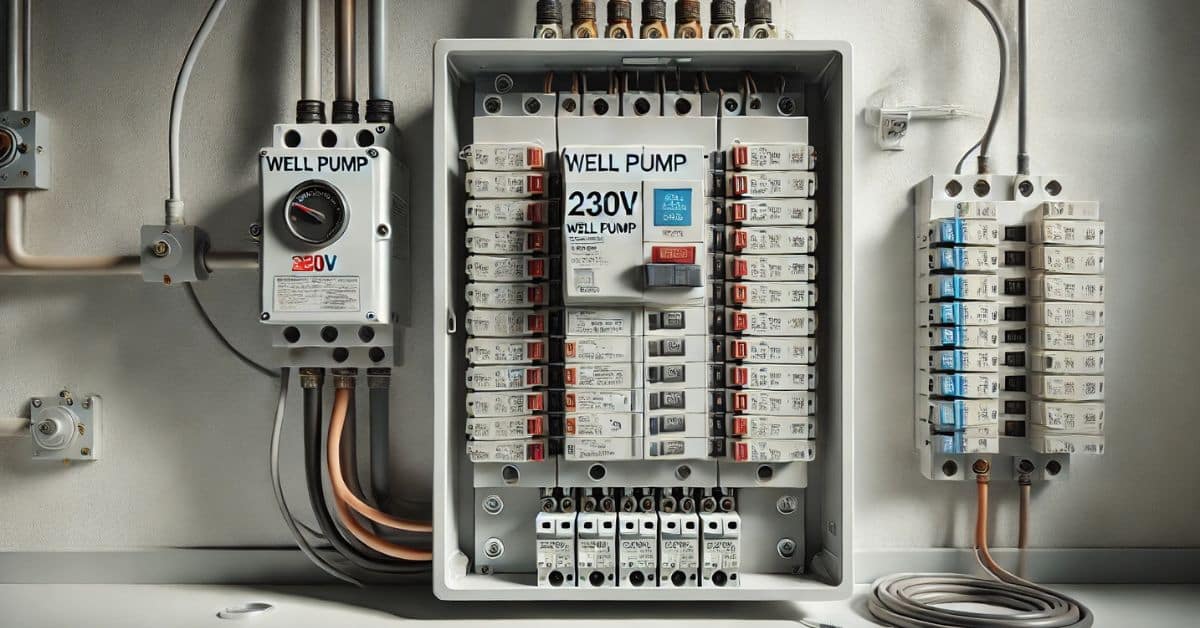
Choosing the right breaker size for a 230V well pump is important for its safe and effective operation. For most 230V well pumps, a circuit breaker of 25 to 30 amps is typically recommended. With the right breaker in place, you’ll maintain not only the longevity of your pump but also the safety of your entire electrical system.
I understand that figuring out the technical details can get overwhelming. The amperage of your well pump directly affects the size of the breaker you need, and using an undersized breaker can lead to tripped circuits or worse, equipment damage. Knowing this information can help you avoid costly repairs down the line.
For electrical safety, I can’t stress enough how important it is to get things right. If you’re unsure, consulting with a professional is always a smart move to make sure everything is up to code and functioning as it should.
Understanding Well Pump Basics
For well pumps, knowing their components and types is important. This knowledge helps make sure you select the right pump and breaker for your needs.
Components of a Well Pump System
A well pump system consists of several key components. At the heart, you have the pump itself, which can either be submersible or jet-style.
- Submersible Pumps are placed underwater, pushing water to the surface. They are efficient and great for deeper wells.
- Jet Pumps work above ground and use suction to pull water up. They’re better for shallow wells.
You also have the pressure tank, which stores water and maintains pressure in your system. The control box regulates power and controls the pump.
Lastly, you need wiring and breakers to safely connect your pump, making sure it can handle the horsepower required. This setup protects both the pump and your electrical system.
Types of Well Pumps
There are two main types of well pumps: submersible and jet pumps.
Each type has its strengths and ideal use cases.
- Submersible Pumps: They are typically more efficient and can work in deeper wells, often yielding more horsepower. These pumps are sealed and installed underwater, reducing the risk of overheating.
- Jet Pumps: They function well in shallow wells and use a combination of suction and pressure. These pumps are generally easier to access for maintenance since they sit above ground.
When choosing a pump, consider factors like depth, flow rate, and horsepower. Knowing your well’s specifications helps in selecting the right pump for your needs.
Electrical Foundations
When dealing with a 230V well pump, it’s important to grasp the basics of electrical principles. Key factors include voltage, amperage, horsepower, and the type of phase your pump uses. Understanding these concepts makes sure you choose the right breaker size for optimal performance and safety.
Voltage, Amperage, and Horsepower
Voltage refers to the electrical pressure that pushes current through a circuit. For a 230V well pump, this means the motor receives power at that specific voltage level.
Amperage, on the other hand, is the amount of current flowing. To maintain safety, I check the pump’s full-load current rating, which is usually available in the manual.
Horsepower (HP) measures the pump’s power output. Horsepower ratings, like 1HP or 1.5HP, indicate the pump’s capacity. In selecting a breaker, you must consider both HP and the amperage. As a rule, the breaker size should be 125-150% of the pump’s running amps to handle the starting current without tripping unnecessarily.
Single-Phase vs Three-Phase Pumps
Most well pumps come in either single-phase or three-phase configurations. Single-phase pumps are common in residential settings and require a straightforward setup. They typically operate well for smaller systems. My experience shows that they can be less efficient over longer distances.
Three-phase pumps, while more complex, offer benefits like better efficiency and higher power output. They’re often used in commercial or industrial applications. If I’m working with larger installations, I take into account that three-phase systems usually need a different gauge of wire and potentially a more robust breaker size to accommodate the higher load.
Understanding Wattage
Wattage is another vital element in electrical systems. It represents the total electrical power and is calculated by multiplying voltage by amperage (W = V × A). For example, if my 230V well pump draws 15 amps, the wattage will be 3,450 watts.
Knowing the wattage helps in choosing the right circuit breaker. A typical recommendation is to use a breaker rated for 125% of the pump’s wattage. This makes sure that the breaker can handle any inrush or starting currents, minimizing the risk of tripping during operation. It’s important for me to check these specs closely for safety and efficiency.
Determining the Right Breaker Size
Choosing the correct breaker size for a 230V well pump is important for safe and efficient operation. This decision is based on the horsepower of the pump, its full-load current, and certain formulas that help calculate the right size. Let’s break down how to find that perfect match.
Breaker Size Formula
To determine the right breaker size, I follow a clear formula. First, I find the pump’s full-load current, which is usually found in the pump’s manual. Then, multiply that number by 2.5. This accounts for the inrush current when the pump starts.
For example, if I have a 1 hp well pump, it might need about 12 amps of full-load current. When I multiply that by 2.5, I get 30 amps as the recommended breaker size.
For a 1.5 hp well pump, the full-load current could be near 15 amps. Following the same logic, the breaker size would be 37.5 amps, so I’d likely choose a 40 amp circuit breaker. This makes sure that the pump operates safely and reliably.
Examples Based on Pump Horsepower
Understanding how to size the breaker based on pump horsepower is straightforward. Here’s how it looks:
- 1 hp well pump: Needs approximately 30 amp breaker.
- 1.5 hp well pump: Uses about a 40 amp breaker.
- 2 hp well pump: Generally, this will require around a 50 amp breaker.
For each pump size, it’s always smart to check the manual. The manual usually provides specific current ratings that I can use.
By accurately calculating these needs, I can prevent breaker trips and make sure my pump runs well. Plus, consulting an electrician can provide extra confidence. Always prioritizing safety is key when dealing with electrical systems.
Installation and Safety Guidelines
When installing a 230V well pump, it’s essential to consider a few key aspects to maintain a safe and successful setup. I’ll focus on choosing the right wire gauge, accounting for distance and voltage drop, and maintaining compliance with relevant electrical codes. Each of these factors plays a critical role in the performance and safety of your installation.
Choosing the Correct Wire Gauge
Using the right wire gauge is important for safety and efficiency. For a 230V well pump, I usually refer to the American Wire Gauge (AWG) system. Generally, a 12-gauge wire works well for pumps drawing up to 20 amps. For higher amperages, such as a 30 amp load, I opt for a 10-gauge wire.
Common Wire Gauge Recommendations:
- 12 AWG: Up to 20 amps
- 10 AWG: Up to 30 amps
- 8 AWG: Up to 40 amps
Thicker wires help prevent overheating and make sure the pump operates effectively. Always check the pump specifications to determine the full-load current and select the appropriate gauge.
Distance and Voltage Drop Considerations
Distance between the power source and the pump impacts voltage drop, which can affect performance. Over longer runs, voltage drop increases resistance. I keep this in mind when planning my installation.
As a general rule, I aim for a maximum voltage drop of 3% for branch circuits. For a 230V pump, this means keeping voltage drop below 6.9 volts. If the distance exceeds 100 feet, I may need to upgrade the wire gauge to compensate. This consideration makes sure the pump receives the power it needs to function optimally.
Compliance with Electrical Codes
Following electrical codes is non-negotiable. I always refer to the National Electric Code (NEC) and local electrical codes to maintain compliance. These codes set the standards for safe installation practices, including wire gauge, breaker size, and proper grounding techniques.
Before starting my projects, I make sure I have the latest codebook or consult a licensed electrician if I’m unsure. Additionally, securing the right permits is important for safety and can prevent headaches down the line from inspections or insurance claims. Being code-compliant not only protects my investment but also maintains the safety of anyone using the system.
Circuit Protection and Troubleshooting
Circuit protection is important for maintaining the health of your well pump and preventing electrical hazards. Understanding how to avoid overheating and tripping will keep your system working well. Regular maintenance checks and using a multimeter for testing are essential for troubleshooting problems that may arise.
Avoiding Overheating and Tripping
One of the biggest risks when running a well pump is overheating, which can lead to tripping the circuit breaker. To prevent this, it’s vital to make sure the circuit breaker size matches the maximum load of your pump. For a 230V well pump, using a breaker that can handle at least 125-150% of the pump’s running amperage is recommended.
When your pump operates under full load, the current can spike, leading to overheating. Therefore, selecting a proper circuit breaker size, generally between 25 to 30 amps for most 1 HP pumps, can help. Keeping an eye on connections and wires is equally important; any loose or corroded connections can cause additional resistance, leading to overheating.
Regular Maintenance Checks
Performing regular maintenance checks on your well pump system can help identify potential issues before they escalate. Start by inspecting the pump, wiring, and circuit breaker connections for signs of wear or damage. Signs include insulation fraying or heat damage around the connections.
I recommend checking your pump’s manual for specific maintenance intervals and guidelines. Routine inspections should also include verifying that the circuit breaker is functioning properly. If a breaker is frequently tripping, this could indicate underlying issues in the pump or electrical system that need addressing.
How to Use a Multimeter for Testing
A multimeter is an essential tool for troubleshooting electrical problems. I regularly use one to check voltage and continuity, which helps pinpoint issues. First, make sure the power is off before making any checks to avoid electrical hazards.
To test the voltage, set the multimeter to the appropriate setting and connect the probes to the circuit. For a properly functioning 230V system, the reading should be close to this value. If the voltage is significantly lower, this could indicate problems in the supply line or circuit breaker.
Check continuity by setting the multimeter to the continuity setting. Place the probes on the circuit breaker terminals. A beep or reading indicates continuity, while no response suggests there may be a fault in the circuit. Regular testing with a multimeter can save you from larger issues down the line.
Consulting a Professional
When deciding what size breaker you need for a 230V well pump, I always suggest consulting a qualified electrician. Their expertise can make sure your system is safe and reliable.
An experienced electrician knows the proper breaker sizes for well pumps. They will evaluate the amps required for your specific pump. This step is important to avoiding issues down the line.
Using a dedicated circuit for your well pump is essential. An electrician can help set this up correctly. This not only protects your pump but also maintains compliance with electrical codes.
It’s important to assess your electrical panel capacity as well. An electrician can determine if it can handle the additional load. They’ll make sure that everything, from wiring to breakers, meets safety standards.
Remember to discuss your specific needs regarding the breaker size required. Different pumps can vary greatly in their electrical demands. Having this conversation upfront can save you money and trouble later.
Taking the time to hire a professional means you can rest easy knowing everything’s done right. Your well pump is a vital component, and I believe it deserves the best care possible.
Additional Considerations
When selecting a breaker size for a 230V well pump, there are several important factors to consider. These include the application type, how to future-proof the system, and the environmental impact of energy use. Each of these aspects can influence the performance and safety of the pump.
Residential vs Commercial Applications
Choosing the right breaker for residential versus commercial well pumps can differ significantly. In residential settings, pumps usually operate under lower loads, typically between 1-2 HP. Therefore, a 30-amp breaker might be sufficient for most cases.
In contrast, commercial applications often entail larger pumps running at maximum load, which might require a larger breaker, possibly 40-amps or more.
It’s also important to evaluate your specific setup, as local electrical codes may dictate certain requirements. For both applications, maintaining electrical safety is key to preventing circuit overloads.
Future-Proofing Your System
Future-proofing is about considering possible upgrades when installing your well pump. If you initially choose a pump rated for 2 HP but plan to upgrade later, you should start with a breaker that can handle larger loads.
For instance, using a 40-amp breaker can prepare your system for future pump increases without needing a complete rewire.
It’s also wise to account for variations in power supply. If your area has a lot of fluctuations, opting for a higher-rated breaker can provide an extra layer of protection for your pump and wiring.
Environmental Impact and Energy Efficiency
The environmental impact of your well pump can be influenced by energy efficiency. Pumps running under maximum load will often consume more power, which can increase your electricity bills and carbon footprint.
Choosing energy-efficient pumps and breakers can help reduce these effects. For a 230V system, consider models designed for low energy consumption while still providing adequate performance.
Additionally, opting for a pump that operates well at 220V rather than 110V can improve efficiency, as it reduces current draw and energy loss. Incorporating these practices contributes to a more sustainable operation in your home or business.
Frequently Asked Questions
When sizing a breaker for your 230V well pump, there are some key details to consider for different horsepower ratings. Each pump’s horsepower impacts the required breaker size, and it’s important to know the amperage draw for safety and efficiency.
What’s the right size of breaker for my 1/2 horsepower water well pump, eh?
For a 1/2 HP water well pump, you typically need a 15 amp breaker. This size makes sure the pump runs well without tripping due to starting currents.
Any pointers on the breaker size needed for a pump kicking 1 horsepower, buddy?
A 1 horsepower pump usually requires a 20 amp breaker. This size accommodates the pump’s operating and startup needs, keeping things running without issues.
I’ve got a 3/4 HP pump at the homestead; what’s the ideal breaker size for that machine?
If you’re dealing with a 3/4 HP pump, a 20 amp breaker is the way to go. This provides enough capacity to handle the pump’s demands during operation while maintaining safety.
Looking to figure out the appropriate breaker size for a 1.5 HP well pump. Can you lend a hand?
For a 1.5 HP well pump, you generally want a 30 amp breaker. This size is important to handle the larger starting currents typical of this horsepower.
What should I consider when choosing a breaker for my water pump to avoid it tripping?
When selecting a breaker, consider the pump’s full-load and starting current. Make sure the breaker allows for inrush currents without tripping while not being oversized, which could prevent it from offering proper protection.
Need advice on the amperage draw for my 240-volt well pump to match the breaker size.
The amperage draw of a 240-volt well pump depends on its size. For instance, a 1 HP pump may draw around 10 amps during regular operation but can spike to 30 amps on startup. Choosing the right breaker will depend on these figures to maintain safety and performance.

Thomas Peterson
Owner WSA
About the Author
Latest Posts
Born and raised in Nanaimo on Vancouver Island. Thomas gained a deep appreciation for the importance of clean, reliable water. With over 15 years of experience working with water treatment systems, Thomas has become a trusted expert in helping local homeowners and businesses resolve the unique challenges of well water across the Island.
From hard water and iron buildup to low water pressure and sediment issues, Thomas takes a practical, no-nonsense approach to solving water problems. Whether it’s installing filtration systems or troubleshooting well pump issues, Thomas focuses on long-lasting solutions that help people get the clean, safe water they need.
As a proud local professional, Thomas is dedicated to serving his community with honesty, quality service, and expert advice tailored to the water conditions of Vancouver Island.
Areas of Expertise: Well Service, Well Pumps, Water Filtration Systems
- Clack Water Softener Alternatives: Top Systems for Hard Water Treatment in 2025 November 8, 2025
- Best Well Water Test Kit Options for Safe Home Water Testing in 2025 November 5, 2025
- Best Well Water TDS Meter for Accurate Home Testing in 2025 November 1, 2025
- Best Well Water Sediment Filter Systems for Clean Home Water in 2025 October 29, 2025
- Best Well Water Saltless Water Softener Systems for 2025 October 26, 2025
Facebook Twitter LinkedIn Instagram Reddit
Fact Checked & Editorial Guidelines
Our Fact Checking Process
We prioritize accuracy and integrity in our content. Here’s how we maintain high standards:
- Expert Review: All articles are reviewed by subject matter experts.
- Source Validation: Information is backed by credible, up-to-date sources.
- Transparency: We clearly cite references and disclose potential conflicts.
Your trust is important. Learn more about our fact checking process and editorial policy.
Reviewed by: Subject Matter Experts
Our Review Board
Our content is carefully reviewed by experienced professionals for accuracy and relevance.
- Qualified Experts: Each article is assessed by specialists with field-specific knowledge.
- Up-to-date Insights: We incorporate the latest research, trends, and standards.
- Commitment to Quality: Reviewers check clarity, correctness, and completeness.
Look for the expert-reviewed label to read content you can trust.